Greek Boy
Nikos and his father, Kleon, were close once, but now Nikos is fifteen, they always seem to be arguing. Kleon expects Nikos to follow in his footsteps as an Athenian statesman and a veteran of the Battle of Marathon. They live in dangerous times. Xerxes, King of the Persians, is subjecting Greek cities to imperial conquest. Athens, Sparta and the remaining city states, are fighting body and soul to resist barbarian rule. But some statesmen prefer capitulation to war and have turned traitor to work with the Persians. When Kleon goes missing on state business to Xerxes, the mob attack Nikos and his family as collaborators, forcing them to flee. Meanwhile, Chief Archon, Themistokles, gambles on a decisive naval war against the Persian fleet, but he makes Nikos uneasy, even as he protects Nikos’s family. Themistokles enlists him as a marine and Nikos vows to defend Athens and exonerate his father.
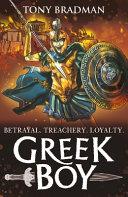
Nikos’s marine adventure leads us seamlessly from the Delphic prophecy of the naval Battle of Salamis (as reported by the Greek historian, Herodotus) to the self-sacrifice of the Spartan 300 at Thermopylae. Despite the cover illustration of a hoplite in battle cry (by Alessandro Valdrighi) and a convincingly murderous combat sequence, this is a story about family life, its affections, tensions and responsibilities. Nikos’s place in Athenian patriarchal domestic and civic culture is meaningfully conveyed. We also get a nice walking tour of the heart of Athens in the 5th century BCE, wonderful visuals of Persian court dress and the glory of Spartan men’s hair. This is the fourth book in the historical novel series for middle grade readers, of which Anglo-Saxon Boy won the Historical Association’s Young Quills Award. Bradman’s series is a boon for its particular appeal to that more difficult readership, young male readers, but it’s highly recommended for all.