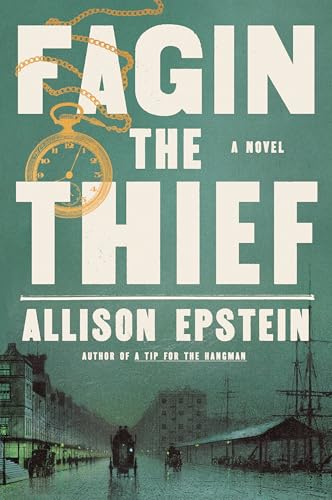
Fagin the Thief
In Fagin the Thief, Epstein entices a vilified creature from the pages of literature and gives readers an opportunity to see Fagin the Hebrew through an alternate lens to Dickens’ antisemitic stereotype—a less biased lens where his mother, his childhood, his environs, and those he meets conjoin to make him who he is, and who and what he becomes. Dickens didn’t bless Fagin with a first name, so to Epstein he is simply Jacob. Scenes in 1838 revisit similar ones in Oliver Twist (familiarity with Oliver Twist isn’t needed) and are interspersed with Jacob’s early life, beginning in 1793, at age six, living with his mum, Leah, in a Stepney slum. Despite his mother’s fair warnings, her beloved son is a product of his times, falling in with a gang and at 11, finessing pickpocketing during five years of expert tutelage. He’s 26 when 13-year-old Bill Sikes stumbles across the doorstep of the tumbledown house in Clerkenwell. Thereafter, various and sundry boys are taught pickpocketing and thievery. The secondary characters—Charley Bates, Toby Crackit, Dodger—seem close to Dickens’ vision, with Oliver a sidenote to a story which is primarily the interrelationship between Jacob, the brutal Bill Sikes and the thief Nancy, Bill’s plucky, long-suffering girl.
Despite his label of career criminal who rarely ventures out to commit crimes, Epstein’s Jacob is very much in the thick of his trade—one which doesn’t make him much money, but a living he willingly shares. This is a kinder, less miserly vision of the thief who, perhaps because he is so extraordinary at what he does, doesn’t fall prey to criminal charges until he is 51. But at that point we’ve seen, through extended vignettes, that Jacob is, above all, a human being rather than a fanciful stereotype. I was thoroughly transported to the mean streets of 19th-century London in this absorbing character study.