Eve: A Novel
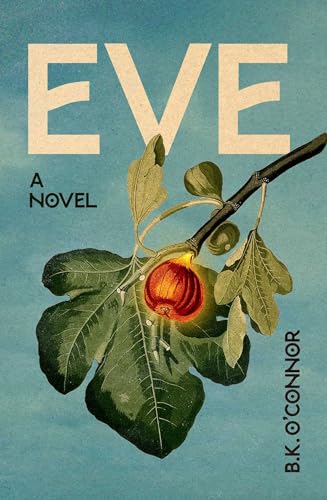
Eve reimagines the life of the First Woman in gorgeous, spare prose, presenting her curiosity as a great strength, and taking issue with those, including her Creator and her husband, who consider it unfortunate at best. B.K. O’Connor begins with the creation story as Milton envisioned it in Paradise Lost (1667). Milton’s epic poem gives a beautiful Lucifer relatably human motivations, leading 18th-century poet William Blake to say that the pious Milton was “of the devil’s party without knowing it.” Eve does the same for Eve, who among other things, resents God’s absence and Adam’s small-mindedness.
After being expelled from the garden, Adam and Eve nearly die of starvation and thirst. Eve’s ingenuity (and a little help from Lucifer) keeps them both alive, for Adam, overwhelmed by the loss of paradise, cannot. The story shifts then, about a third of the way into the novel, in a way I did not expect, but which allows Eve far greater scope for her ravenous curiosity, her desire to know God’s reasons for creation.
While O’Connor illustrates Adam’s inferiority and the nearly modern ways he (and God) disappoint Eve, this is no screed dressed up as novel. It is a heroine’s journey, a lonely quest. The novel has the feel of an epic poem in Eve’s unwavering commitment to her pursuit of knowledge and her divine beauty even into old age. It has a touch of hell and the deliberation of the gods. But where Odysseus learns the hard way not to defy the gods, where Milton sought “to justify the ways of God to men,” O’Connor’s novel is a paean to disobedience. “Always eat the fruit,” Eve advises. Whenever you have the choice, always eat the fruit.