Crescendo
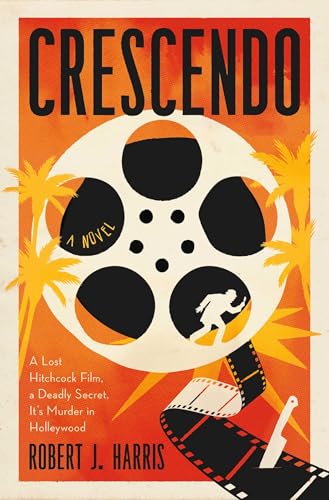
In 1959, Alfred Hitchcock started a new movie project and then abandoned it. That much is true. Crescendo imagines the film he might have made as a complex story within a story, in the style of the director’s trademark thrillers. In a Los Angeles back street, Robert Burgoyne, erstwhile writer of pulp fiction, is trying to be a serious writer when he learns his trashy detective stories have caught Hitchcock’s attention. Burgoyne is invited to complete the script of the great director’s latest movie, Crescendo, but finds Hitchcock’s filmmaking stalled by unexplained accidents. Alongside finishing the screenplay, Hitch wants him to investigate the source of the sabotage. Unable to refuse the assignment, Burgoyne enlists his on-off girlfriend reporter, Tess Donovan, to help crack the case. The film is based on a dime novel about an abducted girl who returns home with amnesia, and the pair begin to find fact amongst the fiction.
There is a little too much Hitchcock-philia when Burgoyne first meets the big man, which holds up the action, including an exchange of jokes some 21st-century readers may find in poor taste. Their narrative function may only be guessed at, except perhaps to show that Burgoyne and Hitch enjoy this kind of thing. Spitzer, an underworld loan shark, muscles in on the action at times for no apparent reason. He is well-drawn but seems to be in the wrong story. The same might be said for the appearance of Burgoyne’s mother.
But Harris is adept at smart guy interior monologues in the spirit of Raymond Chandler. Hitchcock aficionados will enjoy spending time with the big man and fans of Chandler will enjoy the wise guy exchanges as Burgoyne and Tess track the villain across Tinseltown and into a climactic resolution worthy of any noir thriller.