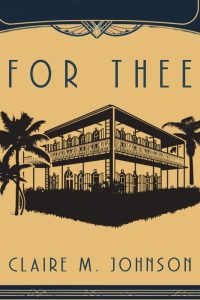
Launch: Claire M. Johnson’s For Thee
INTERVIEW BY M.N. STROH
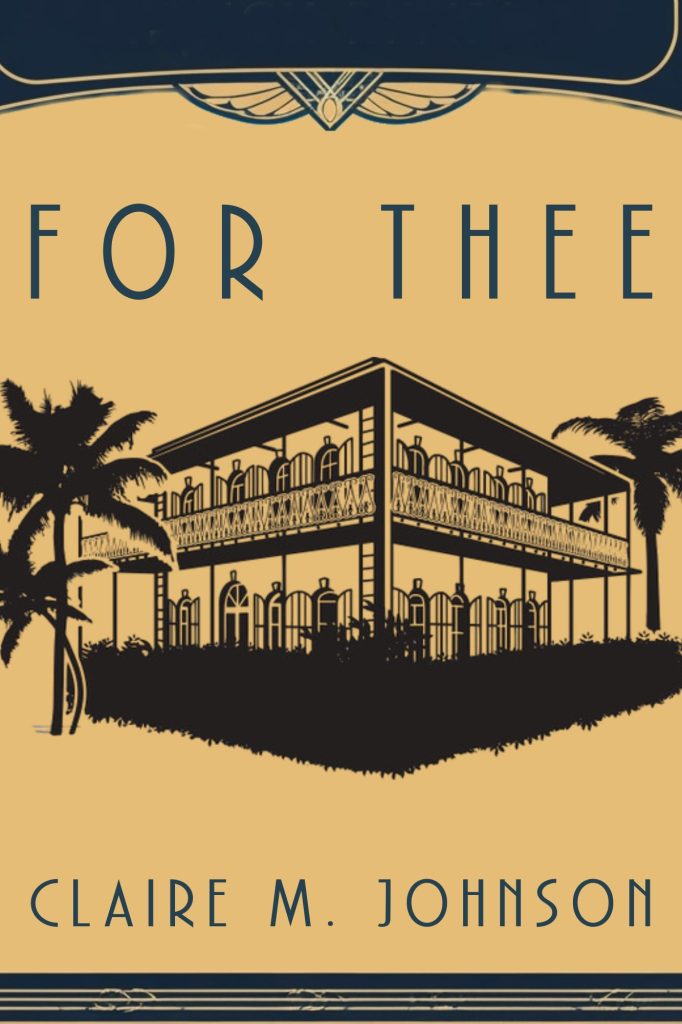
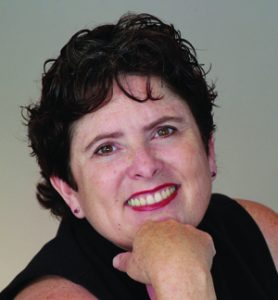
Claire M. Johnson writes crime fiction, historical novels, and Jane Austen pastiches. She is the former president of the Northern California Chapter of the Mystery Writers of America. Claire joins us today to share her upcoming release, For Thee, published through Level Best Books. Her book is now available for preorder.
 How would you describe your book’s premise?
In 1926, Pauline Pfeiffer sails to France to work as a fashion journalist for Vogue magazine, where she immediately becomes part of the elite expat set in Paris, including Sara and Gerald Murphy, Zelda and Scott Fitzgerald, and Ernest and Hadley Hemingway. She falls in love with Ernest Hemingway, who will introduce a new voice in literature for the twentieth century, and is determined to marry him, even though it will cost her far more than she ever thought possible.
What led you to delve into the marriage of Pauline Pfeiffer and Ernest Hemingway?
If the aftermath of WWI left Europe’s landscape destroyed, it also shattered the economic, social, and political truisms underpinning Western society that had dominated the nineteenth century. The major arts underwent a revolution, with Ernest Hemingway leading the charge in literature.
The biographies of Hemingway occupy two shelves in my library, never mind the other historical treatments of the big players of the expat experience in post-war Paris. Both Hadley Richardson and Martha Gellhorn have received their due in fiction. Until now, Mary Hemingway has been ignored, and I don’t see that changing. I felt that Pauline’s story hadn’t been told, even though the ten years they were married saw Hemingway become a dominant voice of American literature for several decades.
She was wealthy, educated, and exceptionally witty. In the current literature, she comes across as “buying” Ernest with her trust fund, the consummate predator who destroyed Ernest and Hadley’s marriage. Yet Pauline remained good friends with Hadley for their entire lives, and she and Mary also became friends. There was a story here that hadn’t been told.
I’m always interested in the underdog, and I think of Pauline as the underdog in Ernest’s marital history. Of all of his wives, she truly understood his genius. And like all of his wives, when she was no longer of any use to him, he edited her out of his life.
Did you come up against any challenges when researching their story?
There are two major hurdles for any author to overcome when writing about Ernest Hemingway. First, he is possibly the most unreliable narrator in the history of man. I have read several biographies of him, and there are large discrepancies vis-à-vis timelines, facts, etc., which is in no way a commentary on the historian. As his stature as an artist grew, so did the grandiosity and embellishment of his history, by himself and others.
The second challenge is the enormous slack his biographers give him because of his genius. I think Hemingway can be both a genius and a troubled soul, who methodically destroyed every one of his relationships with calculated cruelty. I have yet to read a biography of him that successfully deals with that duality. He was, as I understand, incredibly charismatic in life. So he is in death.
Is there a particular character, main or secondary, who really resonated with you? If so, why?
I see Sara Murphy as the “mother” of the expat group in Paris. She and her husband, Gerald Murphy, are widely acknowledged as establishing the French Riviera. Their style and panache are legendary. The loss of her two sons within a handful of years is one of many tragedies that befell the expat set that once burned so bright.
I see that you write fiction in several genres. What attracted you to write historical fiction?
I was a history major at university. As my own bookshelves will attest, history and mystery have always been the first books I search for when entering a bookstore.
Would you say that your experience writing in other genres lends something different or brings a unique draw to your historical fiction?
I’ve never thought of that before, but I do think that, yes, writing crime fiction has played a part. Whatever type of book you’re writing, whether it be fiction or non-fiction, how do you keep the reader turning the pages? It can be Colonel Mustard in the Library with the Candlestick, or it can be an actual battle scene that is so well-written, you can metaphorically feel the canon shot whizzing by your ear. Maintaining lyrical tension is the same no matter the genre.
The history of the characters in my novel For Thee is well known. I couldn’t surprise the reader by having an aha! moment, where I divulge that Ernest Hemingway committed suicide. Although the historical facts underpinning For Thee were vetted by Professor Ruth Hawkins—Pauline Pfeiffer’s biographer—my focus was not so much on the what, where, and how as the who and the why.
Would you say there’s a particular life experience that has most shaped your writing, especially in this story?
Interestingly, as much as I came to dislike Hemingway as a person due to my research, the most powerful experience I have had as a reader was reading For Whom the Bell Tolls for the first time. I was sitting in the corner of my local library, back pushed up against the corner for support. When I finished reading the chapter where Pilar describes the troops entering the village and the aftermath, my hands were shaking so much from the power of the words on the page that I dropped the book.
 What encouragement or words of wisdom would you like to impart to aspiring authors of historical fiction?
Don’t play too fast and loose with the facts—because if you do, readers will notice—but also don’t let them overwhelm the character development. A history buff will eat up the minutia, but your average reader is looking for a character they can relate to, no matter the century.
What is the last great book you read?
The Correspondent by Virginia Evans

HNS Sponsored Author Interviews are paid for by authors or their publishers. Interviews are commissioned by HNS.