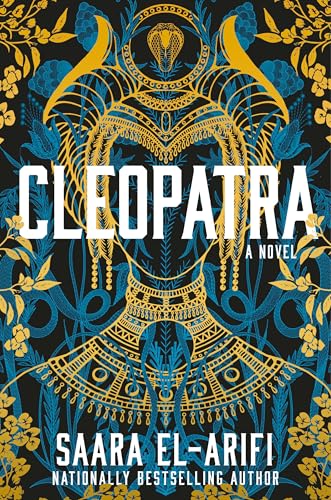
Cleopatra
51 BCE, Egypt: two young women bicker amicably as they play a game. One chews a sun-warmed fig, the other’s linen dress ripples in the warm wind. One of the girls’ fathers is ill. He dies. The girl, Cleopatra, is now Pharaoh, Queen of Egypt. She has been schooled for this, but she’s still nervous, well-intentioned – and a little too trusting. Soon there is dissent, malcontents gathering around her ambitious sister, Arsinoe. Cleopatra needs soldiers – more than she herself can command. She turns to Rome, and forms an alliance with Julius Caesar, her wealth for his soldiers. She falls in love.
This story frames the politics through personal relationships, both family and romantic. Hence, it reads as a love story. The approach makes complicated politics simpler to understand and puts a living Cleopatra into a tactile world. She suffers loss and grief, love and joy, the same as the rest of us. But Cleopatra was not an ordinary woman. She was Pharaoh, and hence divine. Hence, also, immortal. The book is written in first person, as if Cleopatra herself is chatting to the reader. And, as she’s immortal, she is free to comment on everything that has been written about her since her death.
It works as a device to convey her god-status – but I, not being as well-schooled as the author in the works of Shakespeare and Roman historians, found that Cleopatra’s commentary often acted as a spoiler. I think, also, that by portraying Cleopatra as a woman driven by romantic passion, this story still fails to break out of Roman historians’ portrayal of her as whore. What if, in reality, Cleopatra simply used sex as another political strategy? Nevertheless, El-Arifi’s Cleopatra is good company for a visit to ancient Egypt.