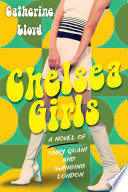
Chelsea Girls
Mary Quant, the name which still outshines every other as innovator of young women’s fashions in 1950s and ´60s London, is a natural talent, a tenacious worker, a fierce defender of her unusual designs. Alongside her husband, the unorthodox APG (Alexander Plunket Greene), Mary becomes the name behind swinging-´60s Britain and one of the early entrepreneurs on run-down King’s Road. In 1955 she opens Bazaar—an eclectic bohemian boutique where the customers go gaga over Mary’s innovative look. It sells out in days. In Knightsbridge, the second Bazaar has in-store models: Jean Shrimpton, Pattie Boyd (Harrison), Twiggy. The swinging London Youthquake enthusiasm soon takes the US by storm.
Britain is primed for a change, and Mary channels it. Those changes are lived by Lloyd’s three fictional characters: Chrissie meets Mary at Goldsmith’s in 1951, a life-long trusted friend and devoted employee; Daphne, daughter of a peer, first to earn a wage in her family, determined to shape her own destiny as a model; Fern, a teenager from a dysfunctional family, which doesn’t deter her from becoming a top model.
Barbara Mary Quant (1930-2023) designed and made her own clothing in the early ´50s, and became a world-renowned rag-trade designer of hundreds of items per year by the mid-´60s. She was a formidable saleswoman, who never overcame her stage fright, using APG as the company front man. She remained relentlessly dedicated to her customers’ expectations: young women demanding fun, vibrant, sassy clothing, a world away from dowdy wartime makeovers. Lloyd’s novel ripples with Mary’s energy, illustrating her kindness, never expecting more of others than she gave herself. Notable cameo appearances add flavour to the era. I was easily able to conjure those teen days, the atmosphere positively thumping its way through 1960s Britain. Definitely recommended.