Boudicca’s Daughter
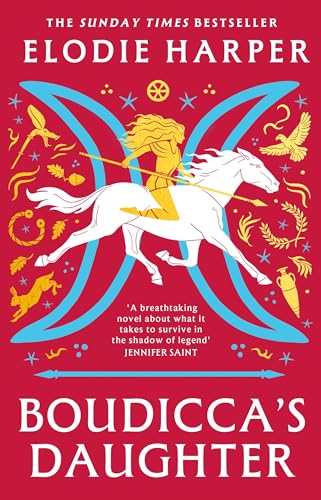
 Britain, AD 60: History has not preserved the names of Boudicca’s two daughters, gang-raped by Roman soldiers and their mother flogged (as recorded by Tacitus), when, under the terms of Boudicca’s husband’s will, the Iceni queen laid claim to his East Anglian kingdom. In revenge, Boudicca’s army sacks and burns Camulodunum (Colchester) and then London, only to be vanquished by the Romans at Verulamium (St Albans) whereupon Boudicca commits suicide.
This is the imagined story of Solina, the elder daughter, told in alternating voices, hers in first person, the other dramatis personae in third person. Though compellingly written, the first third of the novel is paradoxically the least immersive (for this reader) even though it deals with recorded events, for we already know what is going to happen. Then Solina is captured by Gaius Suetonius Paulinus, the Roman governor of Britain, and a relationship gradually develops, of a kind that we would now refer to as Stockholm Syndrome. It is here that the story really gains pace. All of this might be invented historically, but the novel does not read that way. It convinces; these events were possible in that time and place.
Boudicca’s Daughter is a compelling account of what happens in the red mist of vendetta; innocents die in their thousands. As the action moves to Rome, where against Paulinus’s will, Solina is forced to become a slave to Poppaea, wife of the notorious Nero, the nature of tyranny is portrayed in a way that would be recognisable to a student of modern history, or indeed an observer of contemporary geo-politics. The emperor is mercurial, sexually deviant, self-enriching and wantonly cruel, because there is no one to stop him – but he is not a lurid caricature. He is terrifyingly real. I thoroughly recommend this novel, and its heroine.