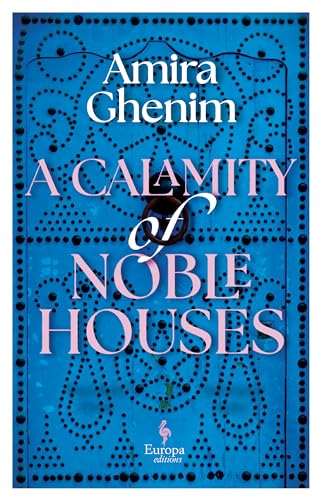
A Calamity of Noble Houses
What price honour? The destiny of two noble families hangs in the balance in 1930s Tunisia when a never-disclosed letter, assumed to be the correspondence between two lovers, one of whom is a married woman, leads to a series of fateful assumptions and an attendant number of unforgivable cruelties. In the course of a single night, the life, health, and happiness of Zubeida al-Rasaa’ and her erstwhile tutor, El-Taher El-Haddad, are destroyed while members of the household who witnessed the tragedy are doomed to relive the traumatic event during their entire lives.
Interweaving the testimonies of eleven different narrators throughout key moments of the history of modern Tunisia, a richly patterned tapestry emerges that throws a startling light on the original catastrophe and illuminates the ways in which people remember and narrate incidents in diametrically opposed, contrasting ways, laying bare their prejudices, hypocrisies, and inconsistences. In the end, it is left to Zubeida’s modern, erudite granddaughter to assume the troubled custodianship of a legacy that comes not only in the form of painful memories and contradictory reminiscences, but of one of the noble houses of the novel’s title. She undertakes a search for the truth that might or might not yield the resolution she so ardently desires—the restitution of her grandmother’s reputation and a path into a future, where Tunisian women are no longer judged by the merciless standards of the conservative patriarchy.
Featuring the real, historical personality of El-Taher El-Haddad, whose pioneering work Our Women in the Shari ‘a and Society turned him into a pariah while showing Tunisia the way to modernity, A Calamity of Noble Houses is a stirring portrayal of a society rent apart by the need to observe tradition and the ambition to reform. The storytelling is extraordinary.