Reconciling Biblical Story & Egyptian History: Exploring Two Aspects of the Ancient World
by Ann Swinfen
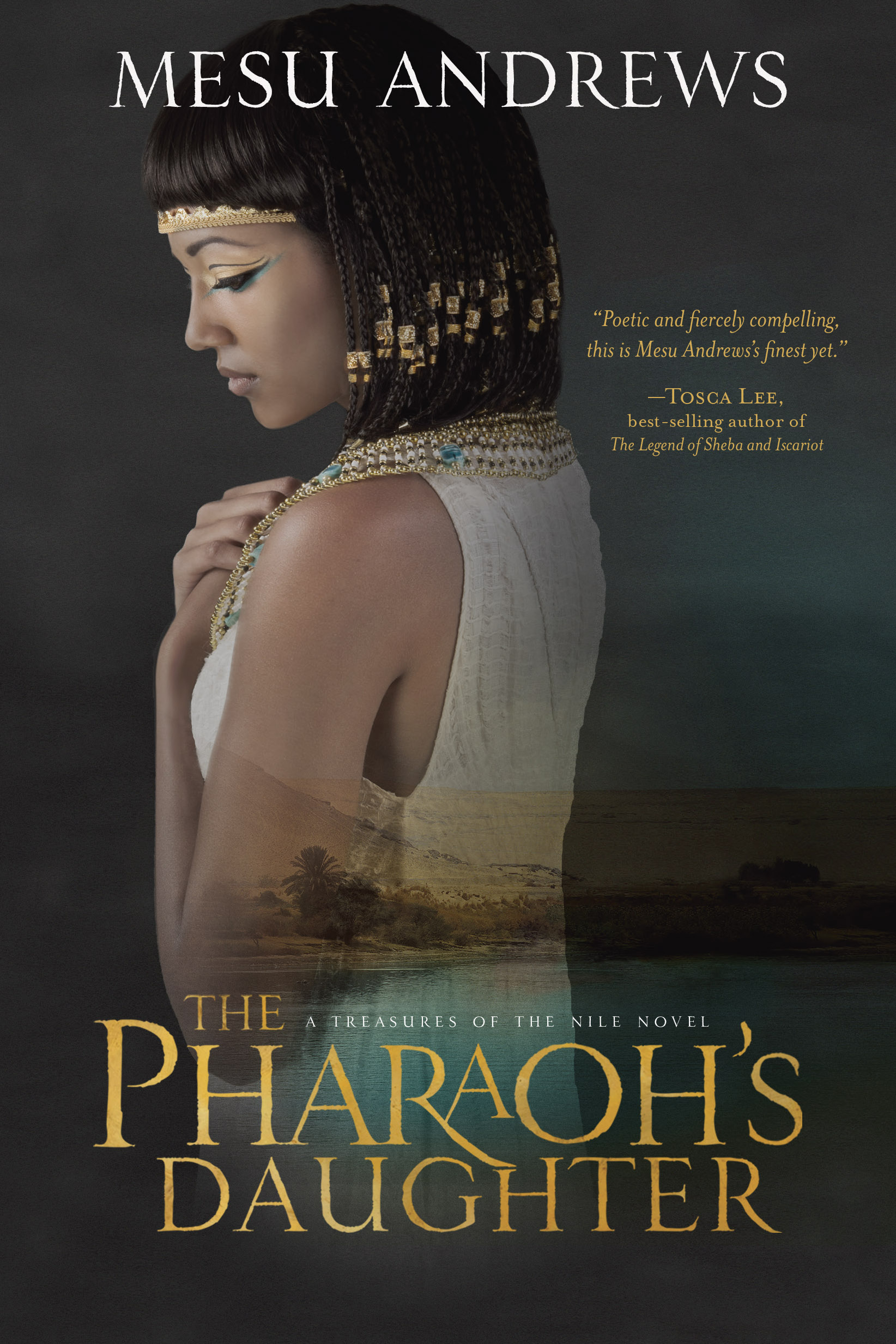 It is one of the best-known stories in the world. When the sons of Jewish slaves in Egypt are being killed at birth on the orders of Pharaoh, one baby is set afloat amongst the reeds in a woven basket. He is discovered by Pharaoh’s daughter and reared in the palace as an Egyptian prince, only to return years later to lead his people to freedom.
The child was Moses. Pharaoh’s daughter is unnamed.
This is by no means the only story of the abandoned baby who returns as a hero or king. It is a common motif in legend and folk tale. Oedipus and the twins Romulus and Remus spring to mind. Like Moses, the twins were also set afloat, while Oedipus was abandoned on a mountainside. There are similar stories in many cultures.
In The Pharaoh’s Daughter (Waterbrook, 2015), Mesu Andrews has undertaken the complex task of reconciling the Biblical story with Egyptian history. “This woman’s story had always intrigued me,” she says. “Why would an Egyptian princess save a Hebrew baby and raise him as her son? Couldn’t she have children of her own? Did she keep his identity secret or openly defy the king’s edict? So many unanswered questions — not all of which were answered by research.” What might be her motives? “I believe the Pharaoh’s daughter was motivated by both [fear and love] on the day she found that Hebrew baby in the basket. She was shackled by fear as surely as the Hebrews were captive to their masters, and she was bound by a woman’s yearning to love with a mother’s heart.”
The Bible itself provides little or no guidance as to the date of the story, and both Biblical scholars and Egyptologists differ in interpretation of dates. Some Biblical scholars are doubtful the Jews were ever enslaved by the Egyptians. “With so many differing opinions, how did I decide what story to tell?” Andrews says. “I went to the one Source of Truth that I’ve built my life on — the Bible. With any biblical novel, I begin by using every Truth in the biblical story as my foundation. I then use historical facts as a second layer, adding secondary characters and interesting cultural and scenic texture. Creative fiction becomes the mortar that holds Truth and fact together.”
It was necessary, however, to make a decision about which period of Egyptian history to use. After some research, she decided the reign of Tutankhamun, around 1250 BC, was feasible. He had no daughters, so she made Anippe, the Pharaoh’s daughter of the title, his sister, daughter of the previous Pharaoh. Writing the novel was made more real for her by visiting an exhibition in Seattle, “giving the opportunity to actually see the intricate furniture, jewelry, and mummies of ancient Egypt.”
The background and life of the woman in the Bible are a mystery, leaving Andrews free to invent them to provide a credible reason for the adoption of the Jewish baby. In the novel, Anippe has witnessed her mother dying in childbirth, which has given her a lifelong terror of pregnancy. As a royal princess she has an arranged (but acceptable) marriage and is expected to fulfil her duty by producing an heir. The prolonged absence of her husband at war and the discovery of the baby provide the opportunity to fake her own pregnancy, with the connivance of Moses’s sister Miriam and the Jewish midwives. She passes off Moses as her own child, although it proves awkward to account for his size and age. This link between the palace and the Jewish slave camp gives Andrews scope to explore both worlds.
I asked about the next project. “The main character is Miriam, Moses’s sister. For her eighty-six years, Miriam has found complete contentment in her relationship with El Shaddai, but when her brother Moses returns from exile proclaiming God’s new name — Yahweh — troubling doubts plague her night and day. Yahweh no longer speaks in her dreams, and her harsh but predictable life is shattered. This Yahweh she thought she knew speaks to others, performs unfathomable miracles, and challenges her to live when she thought her life nearly spent. Miriam’s soul awakens, stirring deep yearning for more of God, more of life, more of love. Unsettled and frustrated, Miriam must choose: cling to familiar bondage or embrace uncharted freedom.”
About the contributor: Ann Swinfen has published eight historical novels: The Testament of Mariam, Flood, This Rough Ocean, and the Tudor series beginning with The Secret World of Christoval Alvarez. The sequel to Flood will be published in 2015. www.annswinfen.com
______________________________________________
Published in Historical Novels Review | Issue 73, August 2015