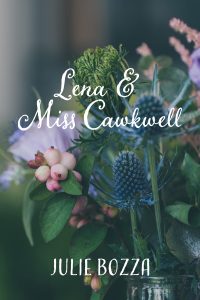
Launch: Julie Bozza’s Lena & Miss Cawkwell
INTERVIEWED BY SUSAN FRAGER
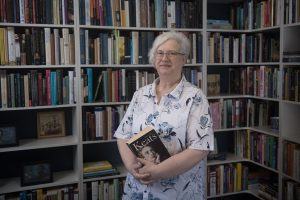
Julie Bozza is an Aussie-Anglo hybrid empowered by writing, fuelled by espresso, calmed by knitting, overexcited by photography, and madly in love with Amy Adams and John Keats.
 How would you describe Lena & Miss Cawkwell and its themes?
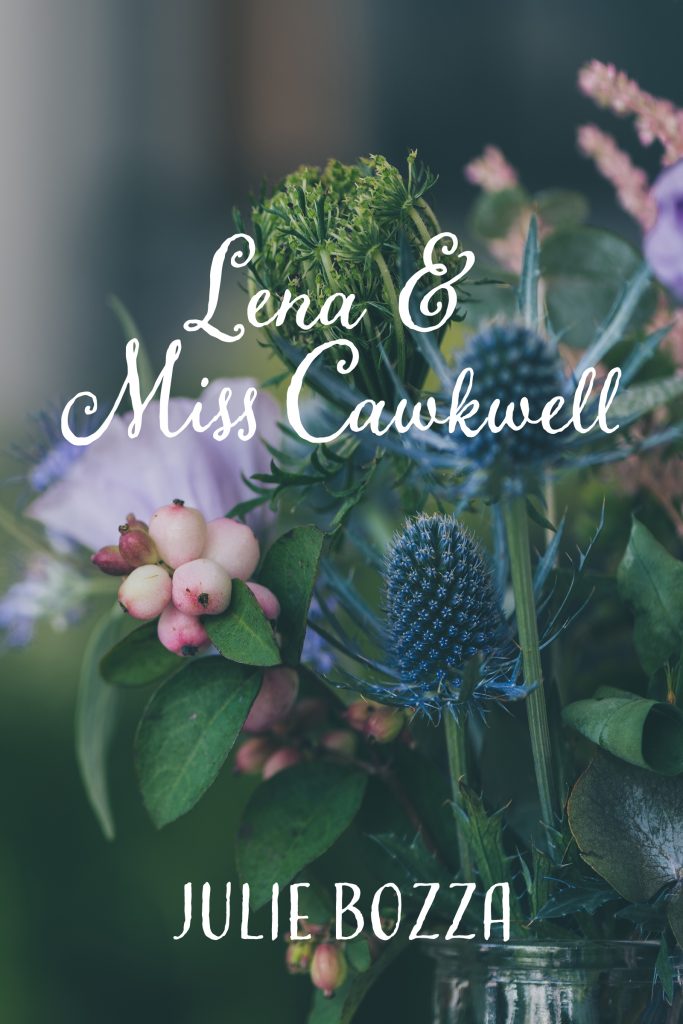
Lena is enjoying the freedoms available on the Home Front during the Great War. With the village men gone to France, she is running the post office and offering sexual solace to the lone wives. But a newcomer—suffragist Miss Cawkwell—upsets all Lena’s notions of what she wants. And the horrors of war eventually reach even this isolated haven.
My understanding is that LGBTQ+ relationships in the UK were a criminal matter until the 1960s. Yet the open secret of Lena getting it on with many of the wives in town doesn’t seem to bother the other villagers, from what I could tell. Can you talk about the history in terms of tolerance or lack thereof at that time?
It is true that male homosexuality was outlawed in England from the Buggery Act of 1533 through the offence of “gross indecency” introduced in 1885, and finally only decriminalised in 1967. However, none of the legislation mentions sexual activity between women. Alas, it is a myth that Queen Victoria declared there was no need to include lesbians in the 1885 legislation as she didn’t believe that such a thing existed! But it seems the matter was never even discussed during the process of making that law, which was explicitly targeted at sexual activity between men.
Writers such as Virginia Woolf were alluding to lesbian characters in their novels and stories, but it was Radclyffe Hall’s novel The Well of Loneliness, published in 1928, that was taken to court on the grounds of obscenity.
Given this background, I felt it realistic that in 1915 Lena could hide in plain sight. Even today, people tend to assume that a person’s gender and sexuality are cis-gender and heterosexual unless proven otherwise. Would Lena’s neighbours even think about her being a lesbian? Not unless she gave them cause!
I think Lena chose carefully who to offer “special deliveries” to, and perhaps there were no more such women in the village than the few mentioned in the book. She only talked about it openly to her friend Emily, who was a loner. Perhaps Lena’s adventures may seem unrealistic to many—but perhaps it also happens more than many of us think.
What were the historical sources you consulted, and how did they inform the story?
I researched a great deal about the English Home Front and the pacifisms and feminisms of the day. We Did Not Fight (1935), an anthology of memoirs edited by Julian Bell, describes the reasons why very disparate people became “war resisters”. Similarly, I was influenced by Outsiders (2017), literary biography by Lyndall Gordon, which includes wonderful information on the pacifism of women writers Olive Schreiner and Virginia Woolf, and how the feminist cause—if indeed it had ever been one coherent movement—was broken apart by disagreements about the Great War.
The novel Despised and Rejected (1918) by Rose Allatini (writing as A.T. Fitzroy) was an unusual book for the time in its sympathy for the main character, Dennis Blackwood, a homosexual man who becomes a conscientious objector. This book was prosecuted under the Defence of the Realm Act in 1918 and destroyed; it was only published again in 1975. I was fascinated by Allatini’s clear-sightedness.
Another interesting novel from slightly earlier was The Odd Women (1893) by George Gissing, which explored the plight of single women in the Victorian era. It was supposed at the time that there were one million more women than men, and therefore a large number of women would be left over or “odd” once the rest had paired up with men and married. This idea was only exacerbated by the horrific casualties of the Great War. How were such women to live and support themselves, when society allowed them so few choices? A century after Jane Austen was writing about the forced necessity—and possible evils—of marriage, there was little or no improvement in the situation.
What do you hope that readers will take away from this story?
I am sure I don’t need to remind readers and writers of historical fiction that LGBTQ+ people have always existed and that women have always been capable. But I enjoyed writing a story set over a hundred years ago in which queer women could live happily and independently and were not doomed by being “odd”. The Great War—a horrible thing in itself—gave them a little more agency than usual. However, I like to think that Lena and Miss Cawkwell would always have found ways to thrive on their own terms, no matter what else was going on.
 What was your inspiration, or genesis, for the characters of Lena and Miss Cawkwell?
I wanted to create two independent women with different backgrounds. Lena lives in a remote rural village, where it has long been accepted that her mother runs the grocery store, and she helps both her mother and her postal-worker uncle in their daily tasks. The surrounding farms are all run by families, with the women perfectly capable of continuing despite the men going to war.
Miss Cawkwell was born and raised in regional England, but she moves to Lena’s village after living in London for several years, doing administrative work. She and her girlfriend at the time were both active suffragists, which would have helped confirm Miss Cawkwell’s sense of herself as intelligent and independent.
Once I had formed that initial mental image of Lena joyfully speeding down the country lanes on her post-office bicycle, embodying her freedom—and Miss Cawkwell stubbornly dealing with an equally stubborn goat she needs to milk—it all grew from there.

HNS Sponsored Author Interviews are paid for by authors or their publishers. Interviews are commissioned by HNS.