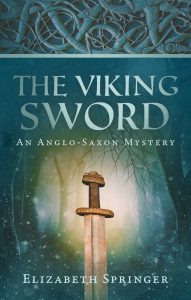
Launch: Elizabeth Springer’s The Viking Sword: An Anglo-Saxon Mystery (Edwin of Wimborne Anglo-Saxon Mysteries Book 2)
INTERVIEW BY LESLIE S. LOWE
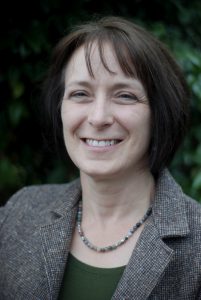
Elizabeth Springer is the author of A Council of Wolves and The Viking Sword in the Edwin of Wimborne Anglo-Saxon mystery series. She holds a postgraduate degree in Viking Studies from University of Nottingham, UK and works as a translator and teacher. She lives in Atlanta, Georgia with her husband and two sons.
How would you describe this book and its themes in a couple of sentences?
In England, in the time of King Alfred, a young nobleman and his wife solve a murder in which a body is found in a locked room, run through with a Viking sword. They also investigate a missing treasure, a case of arson, and a mysterious skeleton.
 What inspired you to start writing historical fiction and what has been most rewarding about it?
I’ve always had the urge to write…something. I just didn’t know what. Then one day my husband said, “Wouldn’t it be fun if there were medieval mysteries, kind of like Brother Cadfael, but set in Anglo-Saxon times?” The rest, as they say, is history! It’s always been a combined effort. My husband is my plotting consultant and does the interior formatting of the books, which he has a particular talent for.
The most rewarding thing about writing historical fiction? I guess it’s the magic that happens when your research melts and blends with your imagination and you look back at what you have written and you don’t really know where it came from.
How is this latest novel different than the first one, A Council of Wolves?
A Council of Wolves is about a real historical mystery, the disappearance of one Mercian king and the emergence of another. The Viking Sword is framed by the movements of the Viking Great Army but is not based on a specific event. Also, in A Council of Wolves, my detectives Edwin and Molgifu (Molly) are apart, solving different ‘cases,’ while in The Viking Sword they are at home and work together to investigate the crimes.
Why the focus on this topic now? Is there a key historical event you found in researching that inspired you to write this story to convey a message for now?
Detective fiction has a timeless appeal to our sense of curiosity, justice, and rectitude. The Viking Sword explores themes of love and betrayal, coming of age, and hidden crime that lead to devastation when exposed. Ultimately, though, I just hope readers will enjoy the story and won’t guess “whodunnit” until the end.
How do you think the reader will connect with Edwin and Molly in this book?
People have sympathy for a young couple making their way in the world. Edwin and Molly are very different—Edwin more introspective, Molly more outgoing—but they complement each other and, along with their household, make a great investigative team. I wanted to avoid the cliché of the detective with a home life in shambles, and instead tell a story where the wedding is the beginning of a productive partnership.
This is crime fiction, though, not romance—and Edwin’s experiences fighting the Danes have left him with emotional scars which he tries to hide. Molly has to learn about this as she goes. Readers who come from a military or law enforcement background will recognize the burden of duty on young men and the sacrifices made by family members.
How did you balance the research with writing the story? Did you find any interesting historical facts while researching?
The Viking Sword takes place from December 879 to January 880, so I had a lot of fun researching how Anglo-Saxons celebrated Christmas. They observed the period of Advent, followed by twelve days of Christmas starting on December 25. I’ve come to appreciate the wisdom of this rhythm: a quiet pause to reflect before an extended festive period with a grand finale.
 What are you working on now? Is it connected to the series or are you writing something new?
Right now I’m plotting and researching Edwin and Molly’s next mystery. It will include cattle rustling, murder, and a shipload of Vikings!
How have your life and work experiences been incorporated with or assisted you in your writing?
I have enjoyed classic Golden Age mysteries all my life. I also grew up in a military family. That mindset of duty, service, and vigilance is at the back of my mind when I consider the role of thegns and warriors in Anglo-Saxon society.
At university, I studied English. Then, being always drawn to the old and weird, I did a PhD in Old Norse at the University of Nottingham. I am fascinated by the complex interactions of Anglo-Saxons and Vikings, whether in art, archaeology, runology, place-names, or literature. Each book in the series explores a different way that the two cultures interacted—and yes, often clashed.
Every author has their own publishing journey. Tell me about yours.
After working on my first novel for a very long time, I started querying. Some show of interest from agents did not lead to publication. Self-publishing, however, seemed very intimidating. Then I attended the Historical Novel Society North America conference in 2021. The indie publishing sessions gave so much concrete, useful information that I gained enough confidence to give it a try.
What advice would you give to other aspiring historical writers?
I love the oft-quoted advice, “Go on reading until you can hear people talking.” Don’t just read about your period, read the original sources written by people who lived then. It’s a direct communication between you and people of long ago, without the filter of intervening ages.
What is the last great book you read? Why?
Tough question! As an English teacher I read great classics all year long. And there are a lot of new books worth recommending. However, my regular companion is a tattered old paperback poetry anthology called Great Poems that my uncle had in high school. He colored in the G and R with a ball-point pen so that the cover reads EAT POEMS. And that is, figuratively, what I do. Reading and digesting poetry concentrates my attention on the sound and meaning of each individual word and how it contributes to the overall message of the poem. A balanced diet of poetry and prose makes me a better writer, and enlarges my understanding of the world.
HNS Sponsored Author Interviews are paid for by authors or their publishers. Interviews are commissioned by HNS.