Launch: Cynthia Elder’s The Drumbeats of War
INTERVIEW BY LESLIE S. LOWE
Cynthia Elder is a novelist, poet and nonprofit leader. Her two-book novel, Tales of the Sea (Holand Press, 2025), tells the true story of a seafaring family from West Barnstable, Massachusetts, during the final chapter of the Great Age of Sail and the tumultuous years of the Civil War.
How would you describe this book and its themes in a couple of sentences?
The Drumbeats of War, the second volume in the Tales of the Sea series, tells the true story of sailors and soldiers during the Civil War years. You’ll also experience life aboard a merchant ship through the eyes of a woman and hear the story of a man who escaped from slavery at the age of 15, finding freedom on the seas as a ship’s cook.
 What inspires you the most in writing historical fiction and what has been the most challenging about it?
Most of us grew up learning about history through the eyes of the great and infamous characters who found their way into our textbooks. I’m more interested in the stories of everyday working people who shaped our world with their determination, ingenuity and willingness to sacrifice. I identify with their struggles and victories. They are more than characters from a bygone error. They are people like you and me.
I feel responsible for doing justice to their lives. That’s why I spend an inordinate amount of time in the research phase of a novel. I want to know my characters and the world they inhabit inside out, so that I can bring them to life with authenticity.
Why the focus on this topic now? Is there a key historical event you found in researching that inspired you to write this story to convey a message for now?
The Drumbeats of War allowed me to show, through the eyes of real people, how the United States spiraled into the Civil War. The issue of human rights stood in the center of the dispute, influenced by powerful financial interests. Each month, another domino fell, until it all broke apart. Political division has once again transformed this country into a tinder box, with deeply entrenched sides unable to find common ground. Our own history can serve as a cautionary tale for the present moment.
Why did you choose this particular time period for this story?
Actually, the time period chose me. I was blessed to have the opportunity to work with a trove of previously unpublished letters, ship’s logs and personal journals from a seafaring family in the Civil War period. Some of the most poignant letters were written by a young man, Josiah, who went to sea as a merchant sailor at the age of 14 and became a soldier in the Union Army.
How do the characters continue to transform within the story? What challenged you the most in writing your characters?
The primary characters – James, Ruth and Josiah – come of age in The Journey Begins (Tales of the Sea, Book 1). Raised in the small farming and seafaring town of West Barnstable, Massachusetts, they carved out their own paths in a changing world.
In The Drumbeats of War, they face the reality of a divided country and endure unimaginable loss, but they never lose heart. James becomes captain of his own ship, with the weight of the world on his shoulders. Ruth imagines the unthinkable: joining her husband aboard a merchant ship as the seas fill with privateers and warships. Ruth’s younger brother, Josiah, once a carefree sailor, now must stare down the barrel of a gun and make sense of the word, “duty.”
My biggest challenge was that I often didn’t have both sides of a correspondence between two people. For example, I would have a letter from James to Ruth, but not Ruth’s reply, and vice versa. I had to read between the lines and use everything I knew about the characters to imagine how they would respond.
How do you think the reader will connect with James and Ruth in this book differently than in the first book?
Children no longer, Ruth and James are citizens of the world, traversing the globe and experiencing the food, religions, languages, music and customs of foreign lands as they transport goods around the world in a time of war. Readers will experience their humor and passion as they fill the lonely days at sea and ache with them as they suffer through the dark times. They have their rough edges, but they refuse to give up on life.
How did research for this story differ from The Journey Begins? Did you do your research for both stories at the same time? How did you balance sharing your research between the two stories?
The primary source material for both books in the Tales of the Sea series came out of a single drawer on the back porch of my husband’s family home, after his parents had died. Tucked away in a box lay hundreds of pages of handwritten documents from Ruth, James, and Josiah – my husband’s ancestors. I transcribed the material and created timelines connecting large and small events in their lives.
A significant amount of additional research was necessary for The Drumbeats of War. I wanted to connect their personal experiences with the dynamic political moment of the 1860s. Cultural, economic, and social changes were transforming countries across the globe, so I studied the events and issues facing each city and country James visited. I also did a deep dive into Civil War history, with an emphasis on the battles Josiah recounted in his letters.
What are you working on now? Is it connected to the series in any way?
One of the documents discovered amongst the family records took my breath away. It was an 82-page handwritten document detailing the story of a man named Thomas White, who fled from a life of slavery in Maryland at the age of 15 and travelled the world as a ship’s cook. Some of his words appear in The Drumbeats of War.
The document is now the focus of an extended research effort I’ve undertaken with the History Department at Roger Williams University to learn more about Thomas and to reunite his descendants with the story of their ancestor. Smithsonian Magazine published an article about Thomas White’s narrative in July 2025, and we are working toward publishing his full account as a stand-alone nonfiction book.
What did you learn and how did you personally grow in writing this series?
I was reminded of the power of love and loyalty. James and Ruth showed me that it was possible to rise above great hardship and lift each other up. Their resilience inspired me to work harder, love deeper, and laugh more.
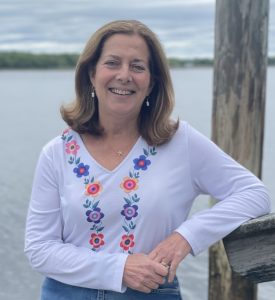 Every author has their own publishing journey. Tell me about yours.
I entered the historical fiction sphere as a newcomer, so I’ve had to work for every ounce of success. I’ve given presentations at libraries, bookstores, sailing organizations, museums, festivals, book clubs, and anywhere there’s an interest. My publishing contract included only print and ebook, so I paid for production of the audiobooks myself. On the plus side, I got to select my own narrator through ACX, a clearinghouse for professional narrators. I chose Joshua Macrae, who masterfully navigated a range of voices with an intimacy that makes you want to keep listening.
What advice would you give to other aspiring historical writers?
Don’t assume your work is over when the writing is done. Get out there and tell your story. Nobody knows it better than you do. Take responsibility for your own success.
What is the last great book you read? Why?
I had to race out and get Ken Follett’s Circle of Days. He’s a true storyteller. He never wastes a word and uses believable characters to build moments in history.
HNS Sponsored Author Interviews are paid for by authors or their publishers. Interviews are commissioned by HNS.