A Memory of Violets by Hazel Gaynor Brings Victorian Philanthropy to Life
JANE STEEN
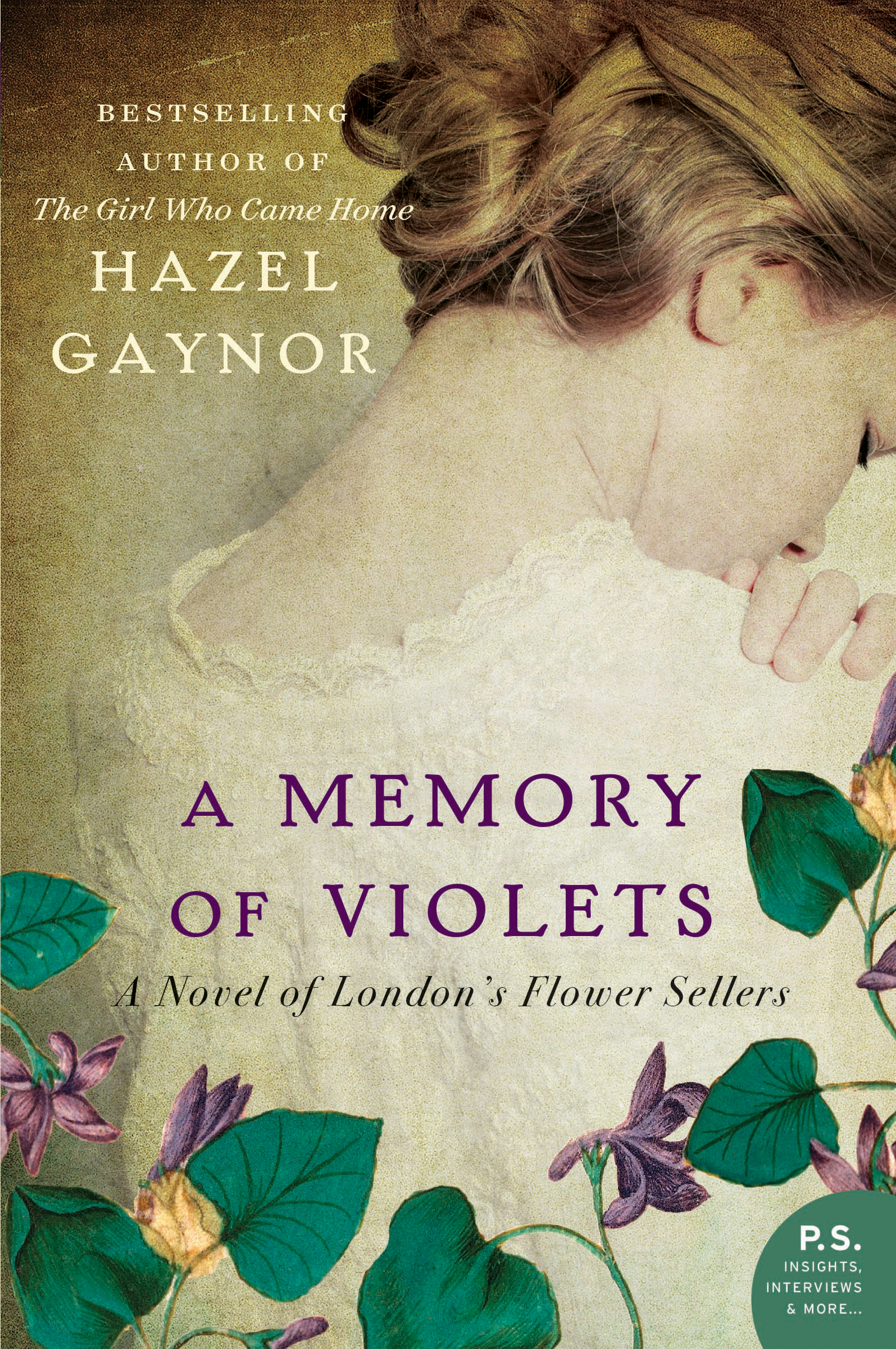 When a historical novelist begins work on a new novel, there are important choices to be made in addition to the usual ones that confront any writer of fiction (such as tense, point of view, and overall plot structure). The historical fictionalist also has to think about what research to include and what to leave out; whether to use real-life characters or whether to portray a time and place using fictional creations; whether there are gaps in the historical record and how they can be filled in.Hazel Gaynor—whose first novel, The Girl Who Came Home, placed fictional characters on the deck of the RMS Titanic—tackles the topic of Victorian London’s flower sellers in her latest book, A Memory of Violets. By 1912, the year that the TItanic sailed out of Southampton and into history, John Groom’s Crippleage and Flower Girls Mission was a thriving community in London’s Clerkenwell district, with a seaside branch at Clacton-On-Sea that housed disabled fatherless girls aged 2 to 14 in attractive “cottage homes”. For over a hundred years, this charity trained the girls (men and women from 1965) to make artificial flowers for displays, banquets and special events. Gaynor sets the novel in an important year for the charity, as it was in June 1912 that the very first flag day—beginning an enduring tradition in British fundraising—was held as Alexandra Rose Day, selling millions of rose badges made by Groom’s flower girls.Gaynor fictionalizes John Groom as Albert Shaw, turning his Crippleage into Shaw’s Homes for Watercress and Flower Girls (one interesting fact that comes out of the novel is that flower girls sold watercress in the winter months). She based the fictional Shaw “on the real John Groom, but also on other philanthropists and social observers of the era.” Around the Groom/Shaw story Gaynor interweaves two fictional threads—the story of Irish flower girls Florrie and Rosie Flynn, and that of Tilly Harper, a young woman who travels from the Lake District to take up the position of assistant housemother in one of the Clerkenwell homes. Tilly’s search for the lost Rosie leads to a better understanding of her own past, and allows her to move toward reconciliation with her disabled sister, Esther.
 In writing A Memory of Violets, Gaynor adopts a style that hints at the novel’s basis in reality, interspersing dramatic scenes with letters and diary entries and including the fictional Shaw’s memoirs in the book’s supplemental materials. And yet, she told me, she “relished the challenge and the creative freedom to tell a story in my own way”—her fictionalization of fact was “a response to the creative urge to tell a story—to create my own characters with [their] imagined conflicts, relationships and dilemmas. This allowed me much more scope and depth in developing the various threads of the novel, rather than sticking strictly to the known facts.”An author’s note gives the reader brief details of the real organization behind the Shaw’s Homes story, linking it to its modern descendant, the UK charity Liveability, and the work still being done today by the Alexandra Rose Charities. The reader is, in effect, invited to explore further, a transparent example of one of historical fiction’s favorite claims—that it serves to engage the reader in history, to inspire and provoke reflection, especially in an age when we can easily locate facts and find supplemental reading on the Internet. As Gaynor told me, “This is the joy of writing historical fiction—the ability to create characters and conflict and story and present all of that in the novel form, where those characters become real to the reader.”Another role that the historical novelist assumes is to make history more accessible to the 21st-century reader. Historians are well aware of the very different language that surrounded disability a hundred or more years ago, but to the average reader the older terminology and attitudes may appear ill-informed, patronizing or downright offensive. Engaging a reader in the history of an era—with the hope that he or she will want more—starts with creating bridges between the centuries. As Gaynor says, “many human dilemmas remain the same: love, hope, fear, regret . . . .with an historical novel it’s essential for the reader to trust the writer—they need to be drawn into the historical setting, and then almost forget they are there because it just feels natural. It shouldn’t be jarring or forced or evident that the author is waving a flag to show off their wonderful research or to say, ‘Look! This is how the Victorians spoke to each other!’”
The history of John Groom’s Crippleage is a prime example of how reform-minded Victorians were able to apply the energy and prosperity of the later stages of the Industrial Revolution to the huge task of tackling the poverty, neglect and need that they saw around them in cities. In writing A Memory of Violets, Gaynor has chosen a subject that should interest many readers and prompt them to think about the experience of disability—and the era’s solutions—in an age not so very far removed from our own.
About the contributor: Jane Steen was born in England and has lived in three countries, but still manages to hang on to the English accent. She currently resides in the Chicago suburbs with her family, but visits the UK as often as possible. Jane is a self-published author of historical fiction, starting with The House of Closed Doors, the first in a series. She’s also a runner, a knitter and designer of lace shawls, and full-time executive assistant to a cognitively disabled daughter.