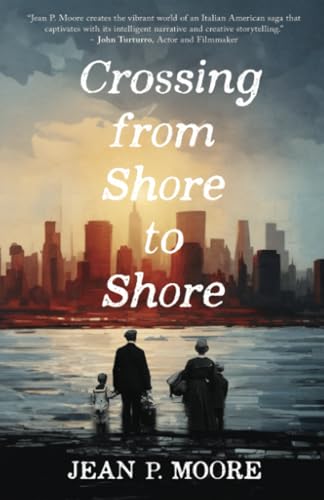
Crossing from Shore to Shore
In 1918 Connecticut, two brothers—shoemaker Erasmo Perretta and his invalid brother Giuseppe—are arrested for allegedly murdering their neighbor. Jean P. Moore imagines the details of this true criminal case, telling the story through three points of view and across two eras. First, we hear from the narrator, the great niece of the two men, as she travels to Italy in 1996 to learn about their early years. We also hear from Erasmo, in the third-person point of view, as he explains his recruitment by anarchists who seek a world without government and do not shy away from violence. Most movingly, we hear from Amalia, Erasmo’s terrified wife, in the first-person as she struggles to make sense of the arrests and trial at the time and over seventy-five years later. The brothers’ alleged crime proves less important than their ethnicity and politics, in a tale involving planted evidence, spies, and treachery. Just a few years before the better-known Sacco and Vanzetti case, the Perretta brothers faced similar forms of prejudice.
Moore excels at placing the trial in the context of the Spanish Flu, the Red Scare, the rise of anarchism, and World War I. She excels too at creating suspense. Readers will know early in the novel the results of the trial, but they will still be eager to learn how each character reacts to events. Even alert readers watching for clues may be surprised to learn the full extent of the hidden and heartbreaking aspects of the case. The structure of the book is complex, with dual timelines and multiple voices, but for the most part Moore does not lose the thrust of the plot. Only readers looking for an uplifting story will be disappointed.