Following Mary Leakey: Penny Haw Tells the Story through Fresh Eyes
WRITTEN BY NICKY MOXEY
 Penny Haw has a fascinating stable of historical novels – indeed, she’s just won the 2024 Philida Literary Award for them in her native South Africa, an award which celebrates mid-career writers who have three to five books in any genre. (She also has a contemporary novel and a children’s book under her belt.)
All her historical novels tell the tale of strong, intelligent women who, by the nature of their times, also struggle against the patriarchy and society’s perceived limitations of their sex. The Invincible Miss Cust (Sourcebooks Landmark, 2022) is the story of the UK’s first female vet, Aleen Cust, and is set towards the end of the 19th century. The Woman at the Wheel (Sourcebooks Landmark, 2023) is based on the life of Bertha Benz, wife of Carl Benz of automobile fame, in a similar timescale. Both Aleen and Bertha have to step outside the bounds of propriety in order to achieve their goals; both books are excellent reads, written in the first person and immersive.
Follow Me to Africa (Sourcebooks Landmark, 2025) is inspired by the life of distinguished paleoanthropologist, Mary Leakey (1913-1996). Unlike the others, it is written in the third person and includes an extra protagonist; 17-year-old Grace is a fictional character. I asked Haw about that choice.
“Mary Leakey is widely published, both in her autobiography and her academic works. Her writing voice exists. As such, the point of view for Follow Me to Africa is third-person omniscient, which meant I took a step back from Mary. Also, because her autobiography already exists, I wanted to create a different perspective, which is one of the reasons I introduced the dual timeline and fictional Grace Clark to the story. The challenge was telling Mary’s story in a fresh way. I introduced seventeen-year-old Grace as a foil to Mary. I wanted her to provoke seventy-year-old Mary to reflect upon her life.”
And what a life it was; this woman, who had such a huge influence on the field of paleoanthropology, developing techniques and setting recording standards that are still respected today, had virtually no schooling nor formal training. Almost entirely self-taught, she was already developing a reputation for professional excellence before she and Louis Leakey met, and the focus of her life’s work shifted to Africa. The introduction of Grace, and the contrast of lives and times half a century apart, allows Haw to draw Mary clearly and sympathetically.
Another aspect that is well done indeed is landscape as character. I grew up in Kenya in the 1960s, and my family regularly visited the Leakeys in camp; through this book I tasted again the dust of the Olduvai, and the impossibility of travelling through the red mud of the rains. When Grace stands on the lip of the Ngorongoro Crater and sees a landscape so full of life that it seethes, that was the experience of my childhood; I sadly doubt that it is like that today. That same intimate knowledge of the bush and wildlife is also present in Haw’s other novel The Wilderness Between Us (Köehler Books, 2021). This is set in her native South Africa, a very different landscape; I asked where her deep knowledge of East Africa came from.
“Although I’ve lived near Cape Town for decades, I was raised on a farm in KwaZulu-Natal in the eastern regions of South Africa. My childhood was spent outdoors. I know and love the bush and its wildlife and spend as much time as I can in the wilderness. I’ve travelled throughout southern Africa and to parts of East Africa. The bush and animals (both wild and domesticated) are so integral to my enjoyment of life that writing about them seems unavoidable and natural to me. I’m at my happiest writing on the subjects. …. I love the idea of readers feeling transported to the setting. So yes, it was my intention that the bush be something of a force.”
It’s not just in Haw’s African books that landscape is an integral part of the story, though. This same facility is present in her other two books. The Woman at the Wheel transports us to a bustling 19th-century city, with unfortunate amounts of horse manure underfoot, and an edge of danger from spooked horses. The Invincible Miss Cust starts in a gentle Irish country estate and goes on to grey, bleak, unwelcoming Edinburgh before capturing the detail of Aleen’s vet practice.
In my work as a counsellor I frequently encounter problems that are caused, or made worse, by childhood events, such as Grace’s and Bertha’s bereavement, or Aleen’s uprooting from her beloved Ireland. Whilst not a heavily drawn-on theme in any of the books, this underlying darkness gives a depth and weight to her characters that might otherwise be missing, and makes them – to my eye at least – much more sympathetic and interesting than they might otherwise be. It can also give our fictional characters a life of their own. Haw writes:
“I didn’t know when I began writing exactly what would happen to Grace. It’s one of the joys of writing fiction; being surprised by your characters. I was a journalist before I began writing fiction, and once pooh-poohed the notion of an author being led by their characters. I now understand that it happens and how.”
Given that she writes in deeper and also more contemporary periods, I was interested in Haw’s take on the differences: “There’s so much more known about near-period history. The challenges are finding room to move within that information and creating a story that is plausible and, most importantly, entertains readers.”
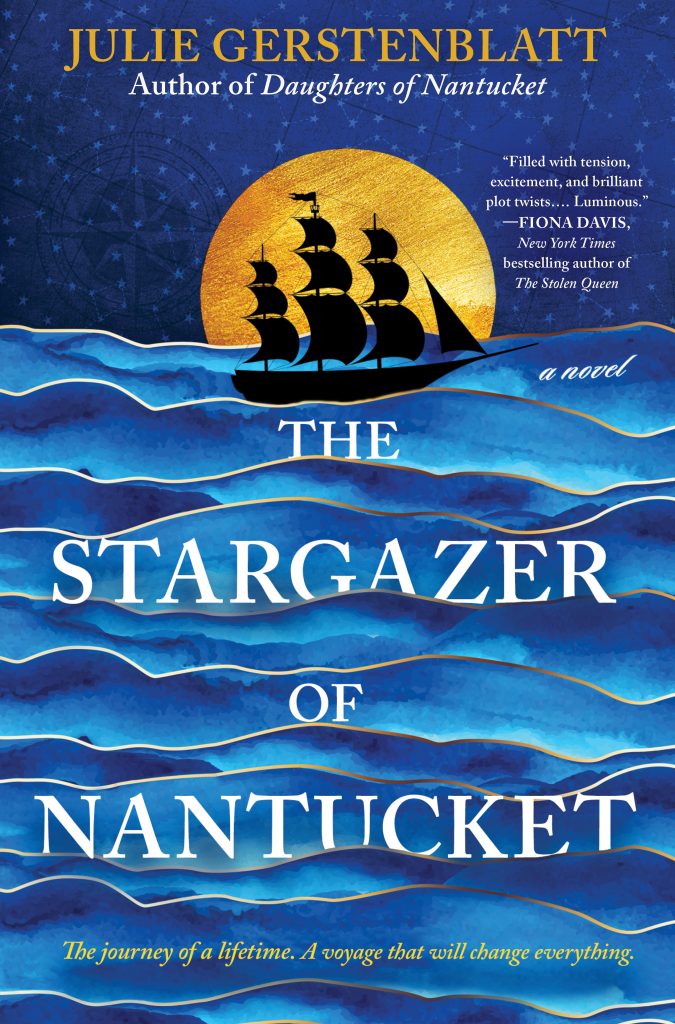
I asked what the next book is about. “It’s set between 1772 and 1789 and tells a story of Caroline Herschel’s move from being a soprano in Bath to relocating near Windsor Castle and becoming a salaried astronomer to King George III. There are no scenes in the African bushveld in this one, but there are animals, walks and rides in the countryside and starry night skies.“
I look forward very much to another book about a complex, fascinating woman, set in a beautifully encapsulated landscape, and perhaps again with that theme of unwanted relocation.
About the contributor: Nicky Moxey is a counsellor and archaeologist who writes about the priory she discovered, and its people – although the next book is a textbook on boarding-school trauma due out in December.
Published in Historical Novels Review | Issue 111 (February 2025)