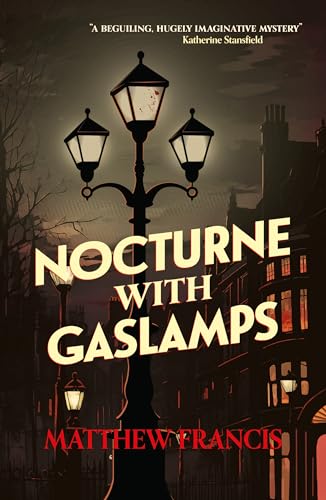
Nocturne with Gaslamps
London, 1883: In an atmospheric prologue, a man gropes his way through darkened streets reminiscent of the paintings of John Atkinson Grimshaw: ‘That’s the trouble with darkness; you can never tell if you’ve got company.’ The main narrative then opens in a seedy Bayswater boarding house, Halcyon House, where the landlady has pretensions to gentility even if after the boiled mutton and turnips no coffee is served, but a ‘coffee-craving interval’ ensues.
Who is Hastings Wimbury? Clean-shaven and gentlemanly, he presents himself as a clerk in the face of the inquisitiveness of fellow resident Miss Cassie Pine, stenographer to a Dr Farthing, an investigator and debunker of paranormal manifestations.
In fact Hastings is an aspiring actor, who takes a menial job in a theatre in order to get closer to his goal, in a Claude Rains sort of way; Hastings is a ‘gas-boy.’ Trouble starts when he encounters the mysterious Count Nollo, who offers him (in exchange for some filching) the opportunity to play The Dane in his troglodyte kingdom of Cimmeria.
The genre, then, is cosy crime, but it is also a comedy of manners, in the interplay between the respectable but adventurous Miss Flora Burlap of Reigate and her two inept suitors. Convincing dialogue suggests the author has read and assimilated a lot of late Victorian fiction. There is also nothing he hasn’t learned about the ingenious special effects employed in 19th-century London theatres, and the passage in which the city is plunged into darkness by a criminal mastermind is a tour-de-force; only the Embankment is exempt, lit as it is by Yablochkov candles (yes, I had to look them up too).
I unreservedly recommend this book, for the quality of its writing and the exhilarating absurdity and comedy of its plot: a Victorian theatrical melodrama on the page.