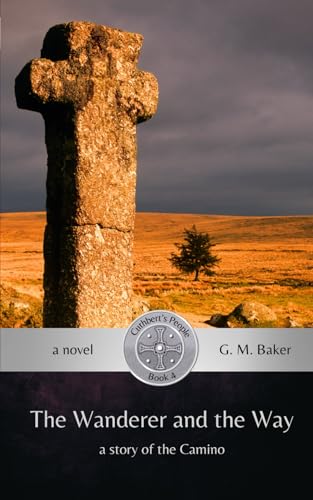
The Wanderer and the Way (Cuthbert’s People)
Set mainly in ninth-century Spain, the subject of this book is a man named Theodemir, a historical bishop who helped found the pilgrimage route Camino de Santiago de Compostela. The author’s historical note informs us that nothing much is known about Theodemir before he became a bishop. The story takes place in that unknown time of his life. The author gives Theodemir very human failings, particularly in his dealings with women. Influenced in his early life by his cruel uncle, he has never considered the inner lives of the sex slaves his uncle keeps. It isn’t until he meets Agnes, a beautiful, chaste woman with whom he falls immediately in love, that he learns to think more about the needs of others. He wants to marry Agnes, but it seems she may never consent to marry him. Nevertheless, he must protect her from his uncle, which necessitates taking her on a dangerous journey on foot to fulfill a political mission.
Although this is part of the larger series Cuthbert’s People, it’s not necessary to read the books in order. Some characters also appeared in earlier installments, but when their backstories are alluded to, the author helpfully includes footnotes informing the reader which books contain the relevant backstory. The parts of the book involving sex slaves may turn some readers off, but in general, readers interested in medieval Spain, Christian history, or (for the series as a whole) medieval England will enjoy this for its elegant prose, compelling characters, and vividly imagined historical settings.