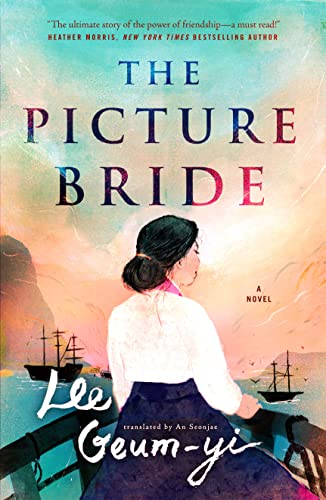
The Picture Bride
Korea, 1917. Willow is offered the opportunity of going to live in Hawaii as a “picture bride.” Her family is poor, living in a remote village where she has no prospect of education so, with her friend Hongju and the rather strange Songhwa, she travels to Hawaii. Her bridegroom, like many other Koreans and Asian immigrants, labors in the sugarcane fields. His family is poor and overworked, but while Hawaii is not the land of riches Willow had expected, she knows her life is better there, and she adjusts.
“Picture brides” are those whose photographs are sent via matchmakers to young male immigrants in North America unable to find wives of their own culture. The potential bride receives a photo of her possible husband. If both agree, the bride is shipped to her new home. The risk of falsified photographs exists on both sides, with the consequent disappointment of bride or groom. This happens to both Hongju and Songhwa, whose husbands are shockingly unlike their photographs.
Besides recounting the progress of these young women to a more prosperous, American style of life, the novel also documents the political strife in Korea and its influences on the lives and work of immigrants who follow closely Korean political wrangling and strife with Japan. This focus on the politics of the home country tends to take precedence over our understanding of Willow’s changing life and her emotional journey within her new country.
Further, the author tells the story in a somewhat detached, omniscient manner, which may be a style acceptable in Korea. However, what the novel gains in historical accuracy and thoroughness it loses in depth of understanding of the protagonist’s experience.