Janis Robinson Daly’s Under Two Flags
INTERVIEWED BY M.N. STROH
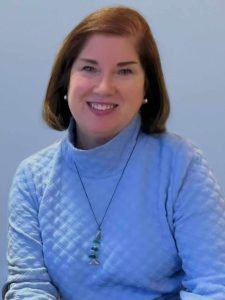
Splitting her time between Cape Cod, New Hampshire; New Jersey; and snowbird destinations, a tablet becomes Janis Robinson Daly’s library and desk, packed for reading and writing, wherever she might land. Inspired by the discovery that an ancestor founded the Woman’s Medical College of Pennsylvania, Daly writes historical fiction, pulling women’s stories from the shadows of history. Through extensive research, she celebrates and honors those women while inspiring and educating her readers.
In this HNS Featured Interview, she shares a behind-the-scenes peek at her newly launched novel, Under Two Flags.
 How would you describe your book?
Under Two Flags tells the compelling story of Josephine Therese Marzynski, a young Jewish woman from Boston who travels to study opera in Berlin. When America enters the Great War in April 1917, her status transforms from student to enemy of the state, compelling her to survive through resilience and passion while revealing how courage and music can sustain one even in the shadow of global conflict.
I understand the original memoir of this book was ghostwritten by your grandfather and published in 1918. What led you to rewrite this account?
Josephine’s extraordinary courage to hold close a passion for her music and country at the tender age of eighteen first drew me to her story. At an age when most young people grapple with self-awareness, Josephine already knew what she believed in: art, patriotism, beauty, and belief. I felt her story could inspire others to embrace their passions, even if the obstacles are seemingly as insurmountable as living as a enemy of the state in a war-torn country.
It’s such a unique slant to write about an aspiring opera singer going abroad to study during this period. Were there any aspects of her life that you found fascinating to discover?
After reading Josephine’s memoir, With Old Glory in Berlin, I was struck by what Josephine didn’t include, namely any reference to her faith. In my research, I discovered she identified as a Jewish woman. Whether she felt it wasn’t relevant or chose to omit it amid the growing undercurrents of antisemitism in 1918, we can’t know. But I found that silence fascinating. In moments of fear and homesickness, people often reach for the rituals and prayers of their faith to anchor them. It felt authentic that she would have done the same, so I wove those quiet expressions of faith into the story to deepen her emotional landscape and sense of identity.
What inspired you to branch out in writing a work set during World War I?
With an oversaturation of World War II books in recent years, I felt an intimate exploration of the human experience during World War I would stand out to illuminate the importance of the Great War as a precursor to the history that would follow. My first novel, The Unlocked Path, also spans the time of WWI, but I didn’t venture into a deep review of those years. It did, however, open my mind to want to learn more about the impact of the war on individuals.
It sounds like you’re an experienced traveler. Have you had the opportunity to do on-site research for this novel?
Unfortunately, I have not traveled to Berlin or Germany, although it’s on my bucket list! I wonder how the book would be received in Germany with its revealing and somewhat negative presentations of the WWI German propaganda machine. However, since Josephine was from Boston, and as a life-long Massachusetts resident, I did strengthen some of her flashbacks to her family time in Boston with references to specific places and events.
I see that alongside writing your books, you are also an accomplished speaker, involved in several book clubs, and offer author marketing services. How do you balance your time?
As best I can, when I’m writing/editing, I try to structure my day with work on marketing tasks in the morning and early afternoon followed by writing at night and reviewing that word count again first thing the next morning. It may have been unknowingly fortunate that I was laid off from my full-time corporate position a year and a half ago to provide more time to follow my passions.
 What encouragement or words of wisdom would you like to impart to aspiring authors of historical fiction?
Keep searching for the stories that are hidden in the shadows of history—particularly those of women. They are there. They lived remarkable lives. We need to find them and celebrate them.
What is the last great book you read?
The Secret Courtesan by Kerry Chaput, a fast-paced art mystery, which blends intellectual intrigue and feminist proclamations. With strong echoes of The Da Vinci Code, the novel swaps Robert Langdon for Dr. Mia Harding, an art historian racing through Venice to prove that a newly unearthed erotic statue was created by a courtesan deliberately erased from history. I included this title on my fourth annual #31titleswomeninhistory list and shared during Women’s History Month in March.

HNS Sponsored Author Interviews are paid for by authors or their publishers. Interviews are commissioned by HNS.