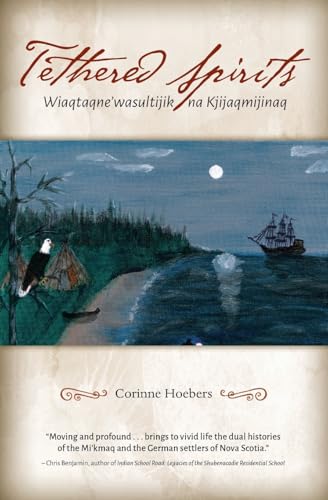
Tethered Spirits
In 1750s Nova Scotia, the British and French fight for North American dominance while the indigenous Mi’kmaq are pushed off their native hunting grounds, forcing their dependence on the French traders. Meanwhile, German settlers who escaped poverty and persecution in their homelands must now endure their own struggles to survive and adapt. French speaking Acadians forcibly being dispersed by the British remain part of the mix of people fighting and struggling as well.
Against this dramatic background, ordinary people’s lives intersect in many ways as this story unfolds. It follows the path of Bear Cub, formerly known as Christian Heber, who has left his German settler family to live and learn with the Mi’kmaq. While his father Michael considers him a traitor and his older sister Elisabeth struggles to understand or accept his choice, his younger sister Hanna respects and admires the values that the Mi’kmaq espouse and sees their dire situation in ways similar to her brother. As the story progresses for both Bear Cub and Hanna, life continues with both joy and sadness as people get married, babies are born, and people die. Hunger and disease are still rampant, however, and fear grows as clashes ensue between the settlers and the Mi’kmaq.
The characters in this novel are undeniably human in that they exhibit a full range of emotional responses to the events taking place in their world. Some want peaceful coexistence between natives and settlers; others think war is the only answer. Details of daily life enhance an understanding of how people lived at this time and in this setting. Recommended for its multi-faceted depiction of life in eighteenth century North America, and in particular for its respectful portrayal of the Mi’kmaq in Nova Scotia during this fraught period in history.