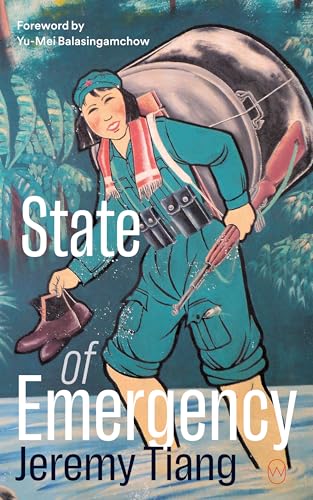
State of Emergency
Singapore, 1963. What can you say about a young woman, Siew Li, who walked away, without warning, from her twin children and husband? Jeremy Tiang says a lot as he weaves an always gripping and mostly grim story of people caught up in the long conflict between the forces of the right and left.
That the right won and steered Singapore through a rapid and rare transformation from third world to first is well-known. The story of the communist insurgence in Singapore and Malaysia has faded from public memory, despite works such as Anthony Burgess’s Malayan Trilogy and Yeng Pway Ngon’s Unrest. State of Emergency is a rich addition to this meagre literature.
Told from multiple viewpoints, linked stories connect small, human acts and place them against a larger narrative of ordinary people trapped in times when torture, murder, and massacre are condoned. From the opening scene, the historical MacDonald House bombing, to a fictional end in which Siew Li’s son gets as close to her as he ever will, this is a remarkable blend of the sweep of history and the minutiae of people’s lives.
There is a version of history which peddles the idea that the American invasion of Vietnam could have learned much from the more successful British-led intervention in Malaya. The survivors of Batang Kali (one of whom becomes a narrator for a while) would, of course, disagree. This novel gives them – and the dead – a voice.
I was left wanting to know much more about Siew Li than the author has revealed, even though she tells the story for some stints. There are surprising bloopers about the time zone in Thailand and a jungle being silent at night. On the balance, these are immaterial defects in this great work of historical fiction.