Anne Perry’s friend, editor, and ultimate collaborator Victoria Zackheim makes Death Times Seven possible
 BY TRISH MACENULTY
After novelist and screenwriter Victoria Zackheim read Cater Street Hangman, (Random House, 1979) Anne Perry’s first published novel, she was hooked. “I loved the characters, the twists and turns of the plots, and Anne’s poetic writing style.”
Zackheim dove into the writer’s oeuvre and had read most of Perry’s novels up to 2012, when she learned Perry was giving a reading at Book Passage, a bookstore in Marin County. The owner of the bookstore, who happened to be a friend, was ill the day of the event and asked Zackheim to introduce Perry, which she happily agreed to.
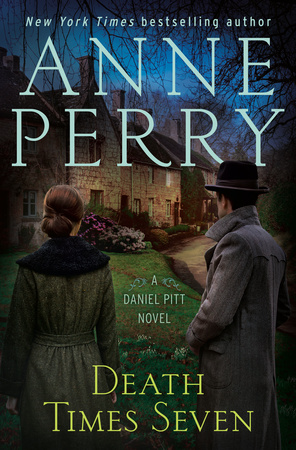
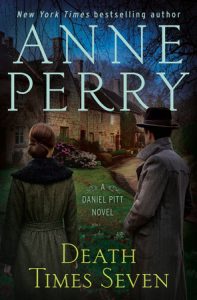
Following the reading, Zackheim offered to take Perry to her hotel, and the next day, she drove the author to the airport. Those two car rides formed the beginning of “a long and wonderful friendship.” That friendship evolved into a working relationship, which culminated with Zackheim having the honor of completing the internationally acclaimed Perry’s final work and the latest Daniel Pitt novel, Death Times Seven: A Daniel Pitt Novel (Ballantine, April 2026), after her death.
At the time of their meeting, Zackheim was teaching in the UCLA Extension Writers’ Program, working as a freelance editor, and immersed in the publication of her anthology, Exit Laughing: How Humor Takes the Sting out of Death (North Atlantic Books, 2012). “I was also doing a massive revision of my first mystery novel, and hitting a brick wall with each iteration.” Perry offered to read the work-in-progress, but Zackheim declined.
“She was gracious, but I could see she was also a bit confused. How could anyone turn down such an offer, and from the woman named by the London Times as one of the top 100 mystery writers of the century! And then I explained. It was because of her great success that I couldn’t accept her offer,” Zackheim said. “I never wanted her to think that I had befriended her because she was the Anne Perry, the writer who might help me get my novel published.”
However, a decade later, Perry insisted on reading it, reminding Zackheim that they were long past worrying about this issue and gave her a few helpful pieces of advice. The Curtain Falls in Paris (Level Best, 2025) was published two years after Perry’s death. “What a celebration we would have had!”
In some ways, Zackheim says she and Perry were night and day. Perry was a devout Mormon as well as an ardent feminist, while Zackheim was “a Jewish kid from Compton.” The two women respected their differences and not only appreciated, but cherished their friendship.
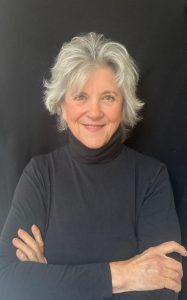
Victoria Zackheim (c. LuluBird)
Zackheim credits her honesty as helping to bond the friendship. “If I questioned, or even disapproved of, something she said or did, I told her … In time, she understood that a true friend can be honest,” Zackheim said. “She trusted me and knew that I would never hurt her. And this was mutual.”
Zackheim noted that Perry became deeply immersed in her characters, and was “always working through some of her personal issues through them.”
“Anne was a dreamer, a woman who held a deep belief in the goodness of people. Because she wrote at least six days a week, she could disappear into her stories,” Zackheim said. However, she points out that Perry was also a wise and astute realist.
“I, on the other hand, tend to be a bit of a cynic. While I do believe in the inherent good in all of us, I also recognize how negatively our lives can be affected by those who hold positions of power. Anne understood, but her deep faith showed her the world in a much kinder light.”
Ultimately, the friendship was based on a profound trust in one another and “a shared sense of wonder at the magic offered by the universe.”
“For Anne, writing was her escape into any world she created. And, in many ways, it was as sacred as her love of God.”
As Perry’s editor, Zackheim’s primary challenge was to employ edits that made the stories clearer, to ensure the characters remained true to the way they had been created, and to ensure the chronology of events was correct.
“One of Anne’s many admirable traits was her openness to suggestions. If I recommended some change to a character, a plot line, a description that didn’t feel true to the story, she was not only gracious, she was effusive in her thanks… if she agreed. If not, she let me know and I edited to her preference. Like most writers—especially those who have attained international respect—she wanted to deliver the very best novel possible,” Zackheim said.
“Anne was always thinking, planning, creating, and I learned early in our collaborative partnership that no idea was to be overlooked. We might have started with characters being spies engaged in high-level espionage, and then redesigned them as the head of a London hospital, a shopkeeper, or the madam of a brothel.”
Perry lived in Southern California while Zackheim was in the San Francisco Bay Area. Although they met every few months, most of their work was done by phone.
“It wasn’t unusual for her to call four or five times a day. The conversations often began with an observation about an event in the story, morphed into observations about the political scene, and ended on a high note, giving each other wishes for good health and good writing,” she said.
In the second half of 2022, the pair was focused on a comprehensive outline, required by Random House, of Death Times Seven, and in November Perry began writing the novel.
Perry called Zackheim one afternoon in December 2022, to say she had just finished writing Chapter 9 and was feeling tired. Late that night, Zackheim learned Perry had suffered a heart attack. She drove to L.A. and sat with her friend in the hospital, holding her hand, watching the monitors, encouraged by the steady beeping, and “listening with a mixture of awe and humor as Perry discussed the novel and her ideas for the next chapters.”
During Perry’s recovery at home, Zackheim was with her often. Then Perry fell ill again and returned to the hospital. She died in April, 2023. Zackheim returned home with the nine handwritten chapters in her bag.
“I was afraid they might get thrown out, and I knew that Brigham Young University was archiving all of her work and might want those chapters.”
Zackheim scanned the pages and sent them to Perry’s friend in Scotland, who returned the chapters in a Word document. After she did another edit, Zackheim sent them to Perry’s editor, Susannah Porter. To her surprise, Porter asked Zackheim to finish the novel. While Zackheim had worked with Perry on a dozen novels and six novellas, this assignment was a fresh challenge.
“I was honored, thrilled, terrified. She told me I must follow the outline and avoid adding elements not created by Anne, and I agreed. I was also relieved that we had worked so hard on the outline, because I knew exactly where the story would go.”
Zackheim revised the nine chapters with the editor’s approval. “Her support, encouragement and enthusiasm not only boosted my confidence, it gave me the energy to keep writing.” After she had done all the edits/revisions of the first nine chapters, which had become twelve, Zackheim wrote the next two chapters herself.
“I was in a state of high anxiety. How could I possibly write in her voice?” But Zackheim says she felt Perry’s presence, as if she were standing beside her. “I was able to hear the voice I’d known for so many years.”
Zackheim sent the two new chapters to Perry’s editor and waited. Finally, the email arrived. Porter said she couldn’t tell where Anne’s writing ended and Zackheim’s began.
“Every minute that I was writing, or thinking about how I’d develop the plot and the characters, was exhilarating and daunting. I don’t lack confidence as a writer, but to write in another writer’s voice, especially the voice of a beloved friend with a universal fan base, was a challenge. I wanted to do right by Anne—I saw this as my final gift to her—and write a novel that reflected her style, her voice, her gifts.”
Zackheim said that while she loved the process, this book is the first and the last Anne Perry novel for her.
“Working on Death Times Seven has definitely given me more confidence. When I was writing The Curtain Falls in Paris, the first of three in the Aria Nevins/Noah Roche series, I had more than a few ‘conversations’ with Anne,” Zackheim said. “I still do. Not that she answers— that is, not aloud—but it helps me to work through rough spots, plot or character weaknesses. Can two people share a loving and trusting friendship, plus years of collaboration and brainstorming, and not be influenced by each other?”
In addition to teaching and editing, Zackheim recently delivered the second in her Aria/Noah series, Murder at Hotel Gloriosa (working title) and is now outlining the third. She is also transforming one of her screenplays into a novel, and has a proposal out for an anthology on aging.
“At my age, the word tomorrow is magical, still leading in the race against posthumous!”
About the contributor: Author of the Delafield & Malloy Investigations series, the historical coming-of-age novel, Cinnamon Girl (Livingston Press, Sept. 2023), and more, Trish MacEnulty is currently working on a play about silent film star, Theda Bara. More info at her website.