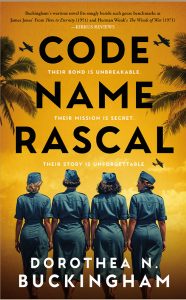
Launch: Dee Buckingham’s Code Name Rascal
INTERVIEWED BY REBECCA ROSENBERG
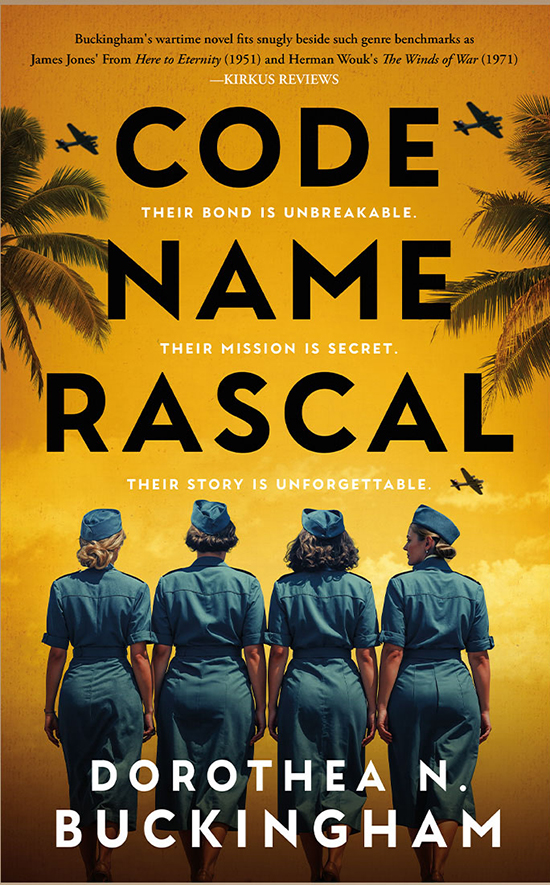
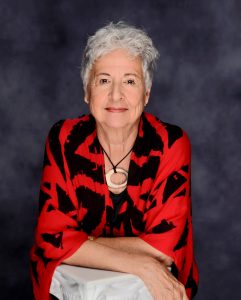
Dee Buckingham is a librarian by training and a “bulldog” for historical evidence by nature. After spending over twenty years researching the lives of civilian women in WWII Hawaii, she unearthed the largely forgotten history of the Women’s Air Raid Defense (WARD). Her professional background in archival collections and oral histories shaped her debut novel, Code Name Rascal, which brings to life the remarkable stories of the women who tracked aircraft and supported the military when land invasion was a clear and present danger.
 How would you describe this book and its themes in a couple of sentences?
Code Name Rascal is a novel set in Honolulu in the days and months after the attack on Pearl Harbor. The story follows four women from very different backgrounds who become members of the WARD, a civilian organization that served in the Army Air Corps as radar plotters. As fear of invasion spreads through the islands, the women are drawn into a hidden world of wartime intelligence, censorship, and suspicion; at its heart, the novel explores friendship, loyalty, and the difficult moral choices they faced as they challenged, supported, and consoled each other.
You spent over twenty years researching this novel. How did your professional background as a librarian influence your approach to unearthing the history of the WARD?
The WARD first appeared in my research more than twenty years ago, when I was researching civilian women in WWII Hawaii. Being a librarian shaped the entire process—it’s who I am by training—but by nature, I’m a bulldog for following evidence, questioning sources, and looking for stories of uncelebrated women.
During my research, I came across a passing mention of the WARD and started digging into archival collections and oral histories. I realized these women had remarkable stories. They worked long shifts tracking aircraft, relaying information, and supporting the military under clear and present threat of land invasion by the enemy. Yet their contributions were largely forgotten. I was fortunate to meet several WARDs; I interviewed them and a few visited the base where they served. I dug into newspaper articles, government documents, and letters, and I kept digging until I had a story to tell.
The story emerged slowly. A photograph, a comment by one of the WARDs, a connection to other characters I read from that period—eventually I had a narrative that deserved to be explored.
Balancing fact and fiction: You noted that you occasionally shifted dates for narrative impact. What is your philosophy on the spirit of the book versus strict chronological accuracy?
Finding a story amid facts while being true to both is a conundrum for all historical fiction writers. For me, since I am a librarian, I am even more at odds with changing facts. I only do it when the story demands it, and when I do, I always mention the historical facts in the Author Notes and typically include an accurate history at the end of the book. However, I believe the human experience of history can only be told through fiction. It must be felt, not processed.
The novel vividly portrays the “Fifth Column” fears that gripped Hawaii. What drew you to explore the friction between military necessity and the civil rights of Japanese-Americans?
Hawaii is a unique place. Then, as now, Caucasians are a minority—in fact, “we” are all minorities—Japanese, Filipinos, Polynesians—and we live on an isolated island chain where we must depend on each other and live civilly, if not harmoniously. Interracial relationships were commonplace daily interactions. The Japanese were classmates, colleagues, and neighbors, so they were not all painted with the brush of being the “enemy” as on the mainland.
While there were definitely suspicions and accusations of sabotage, the only convicted spy for the Japanese was a German citizen, Otto Kuehn, who moved to the islands, sent by the Germans.
The bond between CJ, Ruth, Eve, and Jane is the heart of the story. How did you use their four distinct backgrounds to represent the broader spectrum of women’s wartime experiences?
Although each woman brings a different perspective to wartime Hawaii, their friendship allows them to confront their own fears, uncertainties, and difficult choices while supporting one another.
- CJ comes to Hawaii on December 5 to marry her sweetheart just as the war begins. She is a firecracker journalist who thinks she’ll light the newspaper world on fire; in doing so, she observes Hawaii’s differences, answering questions the reader herself would be asking.
- Ruth is a fourth-generation Navy Officer’s wife who judges herself according to expected behaviors while privately dealing with miscarriages and a stillborn infant. While publicly confident and competent, she doubts her self-worth.
- Eve comes from a prominent local family, giving her insight into the island’s social world. Despite her narcissistic tendencies and ignorance of real-world limitations, Eve rises to the occasion and risks emotional and financial vulnerability.
- Jane represents women whose talent was dismissed because of their gender. Jane is a pilot—a flight instructor—who must choose between her less-than-perfect marriage and volunteering for the WARD.
You included the names of real WARDs such as Nancy West and Fluff Ford. What was the most challenging aspect of fictionalizing the lives of real women who endured such profound personal losses?
More than anything I wanted to tell their stories with respect and dignity. I didn’t recreate their lives exactly but wanted to honor them by placing them in the story. During the writing of the book, knowing these stories were true reminded me of the grit and grace of these unsung heroes.
There is a poignant moment where Eve questions the arrest of family friends. How do you approach the moral ambiguities ordinary people faced in the immediate wake of the attack?
The interconnectedness of Hawaii meant that these arrests hit home. When your neighbors are suddenly being questioned or detained, it creates a profound internal conflict. You are balancing your loyalty to your country with your loyalty to your community. I wanted to capture that friction—how fear makes people act against their better nature, and how others find the strength to stand up for what is right even when it’s dangerous.
 What is the best writing advice you have to share?
The best advice I can offer is not to get off the roller coaster. Buckle that seatbelt, because “it’s going to be a wild ride.” However, before you start your writing adventure, ask yourself two questions: Why are you writing this story? And why are you the best person to write it? The stronger these answers are, the more likely they will keep you motivated through those times you want to hit delete and throw your laptop against the wall.
What is the last great book you read?
Paula McLain’s The Paris Wife.

HNS Sponsored Author Interviews are paid for by authors or their publishers. Interviews are commissioned by HNS.