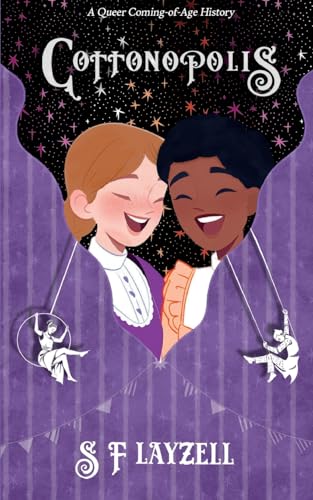
Cottonopolis
This short novel opens with Nellie Doyle describing the sights and sounds of 1840s Manchester, where she lives in one room in an area known as Little Ireland with her parents and three younger brothers. She works long and dangerous hours in a cotton mill, a job she must keep to support her family when her father is made redundant.
In rare moments of freedom, Nellie explores wealthier parts of the city and meets Chloe Valentine, a Black girl who she discovers lives in the workhouse. A man advertising a circus gives Nellie seven pieces of paper, each of which purportedly grants her a wish. While this provides a magical element in what is otherwise realistic historical fiction, most of the events Nellie believes result from her wishes could be attributed to coincidence and interpretation of circumstances.
Nellie addresses the reader directly in the present tense giving her story immediacy. She demonstrates her political awareness early on, saying that cotton comes from America and that it is grown by slaves. ‘Most of the bosses here don’t like to talk about all the people that get hurt to make them rich, but everyone knows about it. Don’t let them tell you otherwise.’
The author’s stated aim is ‘to give voice to imagined queer characters in real historical settings.’ They have certainly achieved this with a lively portrayal of two girls whose feelings for each other grow gradually during the story, combined with working class history that has been insufficiently explored in children’s literature. Minor characters include an unnamed man [Friedrich Engels] writing a report on living conditions in Manchester, and Mr Francis, based on a former slave who gave lectures about slavery to British workers.
Shortlisted for the 2025 Little Rebels Award, which promotes children’s books that explore social justice.