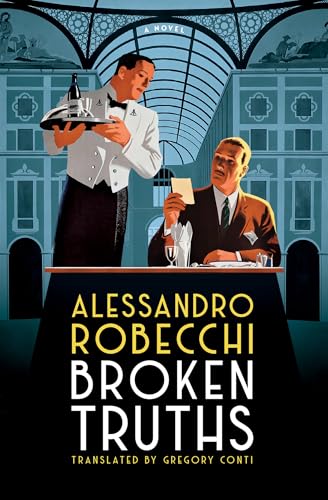
Broken Truths
Manlio Parrini is a long-retired film director who’s decided to make one more film, about Augusto De Angelis, the real pioneer of Italian crime fiction in the 1930s. The fascist Italian government saw crime novels as a threat to their own propaganda machine, so first they put restrictions on writers and publishers, then banned the books altogether. De Angelis became a refugee and was beaten to death by a fascist thug.
The narrative is slow paced, told rather than shown, the meals eaten (pizzoccheri!) and coffee drunk seemingly more important than the crimes investigated. But the theme grabs our hearts and minds with small tendrils that grow and extend until we crack.
As Parrini struggles to finance the film, he finds himself making concessions to the film money people that parallel those De Angelis made to his censors (the villain could never be Italian, etc.) in order to survive. Parrini reflects on the nature of De Angelis’ conformism to oppression, the small concessions that grew larger and larger until he was crushed completely. But there are also small and large acts of resistance, acts Parrini will document in the film.
The story doesn’t allow us the delusion of assuming that fascist oppression is a thing of the past. Parrini finds himself literally living in the middle of a modern-day murder mystery, part of a tale of black-market rents and extortion with international implications, that Parrini has more or less knowingly conformed to in exchange for his own comfortable and enviably located villa. In the end the book is a meditation on how the small acts of conformism make the larger evil possible, but again, the small acts of resistance, including Parrini’s, can lead to that evil being crushed.