Launch: Marlie Parker Wasserman’s Path of Peril
INTERVIEW BY DAVID CONNON
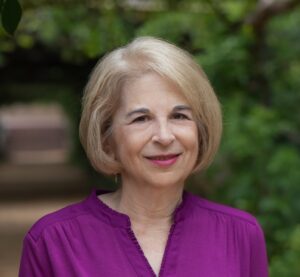
After a career on the other side of the desk in publishing, Marlie Parker Wasserman now writes historical crime fiction. David Connon interviews her about her latest release, Path of Peril. She is also the author of The Murderess Must Die (2021). She is a member of the Historical Novel Society and the Triangle chapter of Sisters in Crime, and reviews regularly for Historical Novel Society Review. Marlie lives with her husband in Chapel Hill, North Carolina.
What is your “elevator pitch”?
A twisty tale of multiple assassins plotting to kill Teddy Roosevelt in 1906 at the Panama Canal. Did it happen? No. Could it have? Maybe!
What inspired you to start writing? And how does your occupational background affect your writing?
For decades I worked as an academic publisher, reading nonfiction manuscripts in the social sciences. On weekends, I read contemporary mysteries and thrillers. When I left my position in publishing, I knew a great deal about cover design and word counts, but little about writing fiction. To help me learn, I watched many online tutorials, and I lined up trusted beta readers to review my drafts.
 What attracted you to writing historical fiction?
I love the fact that the historical record provides a framework; I love even more the gaps. Historical novelists find gaps and fill them in, with fictional but plausible tales, while respecting known facts. We create puzzles and then solve them. Along the way, we can learn the nature of an era, including architecture, décor, clothing, and food.
Every story has a backstory. How did you come to write Path of Peril?
While watching the History Channel, I learned that Theodore Roosevelt was the first sitting president to travel outside the United States. He visited the Panama Canal (then under construction). I began to imagine what might have happened on Roosevelt’s trip, which took place only five years after McKinley’s assassination. Could danger lurk?
Your portrayal of journalist Frederick Palmer is spot-on. It suggests you were once a journalist. What is the common ground between reporting stories and writing historical fiction?
Yes, Frederick Palmer is a fascinating guy. I never worked as a journalist, but I enjoyed reading accounts of Palmer’s dangerous assignments and his political acumen. It’s interesting to compare historical novelists and journalists. In both genres, writers bring their own approaches. For example, if you and I were asked to write about TR’s trip to Panama (and we had access to the same primary sources), we would write markedly different books. This happens to journalists, too. Their background and interests influence the slant of the tale.
What were the most helpful reference books (or sources) in preparing to write this book?
I principally drew from two classics: David McCullough’s The Path Between the Seas and Edmund Morris’s Theodore Rex. To help me paint pictures of women and laborers in the Canal Zone, I consulted Julie Greene’s The Canal Builders, Matthew Parker’s Panama Fever, and Sylvia Jukes Morris’s Edith Kermit Roosevelt. Also helpful was Mel Ayton’s Plotting to Kill the President. I want to add one surprising and little-known source. Joshua David Hawley, the controversial senator from Missouri now known as Josh Hawley, published Theodore Roosevelt: Preacher of Righteousness in 2008. Make of that what you will.
Do you have a strategy for deciding how to tell a story? For example, do you outline a book before you start writing?
I write as a pantser, not a plotter. My characters talk to me, and they determine the plot. My strategy is to begin with a significant historical event, involving drama and conflict (or that could involve those elements). I add characters, historical and created, and see what they do. It’s interesting to see where the story takes me.
Robust characters help bring a story to life. How can an author create characters that are engaging and historically accurate?
It begins with research. Once you have enough period-specific details, you can begin choosing (or creating) your characters. When you know enough details about a historical figure, you can fill in the blanks of his or her personality. For example, I found almost no information on my protagonists, presidential secretary Maurice Latta and Secret Service agent Larry Richey. I started with the little I knew and then invented plausible details.
When characters talk to each other, sometimes they talk disparagingly about people who have a different ethnicity, sex, and/or social class. Can you offer suggestions for writing dialogue which rings true (to the time) and yet avoids offending some 21st-century readers?
You’ve identified one of my hardest problems. In Path of Peril, I have characters, fictional and real, from Barbados, Jamaica, Ireland, England, Italy, and the States. That mixture helps define Panama in 1906. A few characters treat all people respectfully, while more feel uncomfortable around people who are unlike themselves. For example, although Teddy Roosevelt seemed accepting of others during most of the trip, he wrote his son a dismissive letter about Canal laborers. That letter is a sad part of his historical record. Similarly, a leading engineer wrote a report revealing his prejudices. I could have left those details out of the novel, but I chose to portray the atmosphere in Panama at the time. I wanted the fictional characters to interact with others as I imagined they would, based on my reading. I have them refer to people from different backgrounds, using terms we consider offensive today. To do otherwise, tempting as it might have been, would be ahistorical. In short, I want to take my readers into the culture and atmosphere of the Canal Zone, warts and all.
 In the course of your research, what have you learned about the human condition?
Do any of us know what we would do in a moment of sudden danger? Do we imagine we would rush to save ourselves, to save others, to eliminate danger? Or would we shrink from the challenge? With the major assassination attempt at the heart of the book, I have characters making a variety of split-second decisions, which they must live with. On a less dramatic level, if we make promises or commitments, do we keep them? One of my characters is a bit squirrelly about promises. My characters have taught me something: We can plan to be brave or moral, but it is very difficult to live out our intentions.
What is your next project, and how far advanced is it?
I have finished a draft of my third book, Inferno on Fifth, which I am now revising. In 1899 the luxurious Windsor Hotel in midtown Manhattan burned to the ground in about two hours. Needless to say, the six women caught up in the fire all react differently.
What is the last good book you read?
Barbara Kingsolver’s Demon Copperhead is a masterpiece, in every way. I might also mention Karen Joy Fowler’s Booth,which is historical fiction at its best.