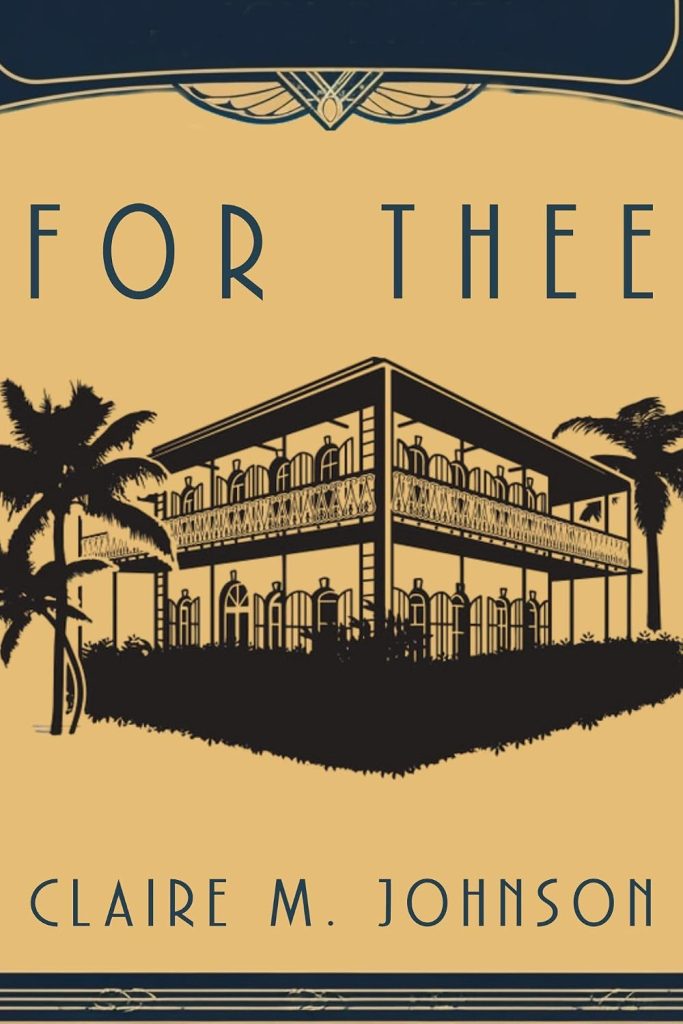
For Thee
For Thee tells a fictional account of Ernest Hemingway’s affair and then marriage to his second wife, Pauline Pfeiffer. Narrated from Pauline’s perspective, the novel weaves back and forth through time, starting in the present – although it’s unclear what that present is – and back to the 1920s. Pauline arrives in Paris, along with her younger sister, after World War I. She soon meets Hemingway, his current wife Hadley, and the other famous and would-be famous American writers, such as Scott and Zelda Fitzgerald.
Pauline describes the comings and goings and various personalities of this singular group of friends she’s fallen in with. She witnesses Hemingway’s true character from the start, and on some level is determined not to fall prey to his charms. Pauline is, after all, friends with Hadley. Good friends. But Hemingway is obvious in his affections for other women, and eventually they land on Pauline. Most of the novel is spent building up to how and why Pauline ended up with Hemingway, then quickly speeds through their marriage and its eventual demise.
Though not written in diary format, the novel reads very much like one. Pauline has a distinct voice, and a distinct agenda in telling both her side and the ensuing repercussions. The novel is well-written with lots of great character development, along with well-rounded side characters who are interesting to read about. It’s a fun trip to another world of 1920s Paris, but I couldn’t help but be frustrated at Pauline’s almost naïveté not to see the writing on the wall and decide her own fate. What might have redeemed her character somewhat is less of a focus on her single-minded path to claim Hemingway, but rather how she stayed friends with Hadley through it all.