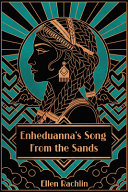
Enheduanna’s Song From the Sands
Could Enheduanna, an ancient Mesopotamian woman who lived around 2300 BCE and whose name was inscribed on still extant clay cuneiform tablets, truly be the first named author in human history? This novel takes that tantalizing historical question and imagines it to be so.
Enheduanna is the daughter of Sargon the Great, the founder of the Akkadian Empire who conquered southern Sumerian cities such as Ur and annexed them to northern Mesopotamia. His wish was to have his daughter become the High Priestess of Ur, a position she assumes but with little support from her royal brothers. A perilous journey to her post brings danger to her physically, politically, and religiously. As High Priestess, her role is not only to protect the people of Ur from the wrath of the gods, but also to provide for their worldly safety and well-being. Her position therefore gives her control of the religious ceremonies as well as the need for beneficial trading conditions and military protection. She further advocates for a growing tolerance of sexual diversity to enrich the fertility of Ur through religious means. Along this rocky path to prosperity, many enemies appear, and she hardens herself to face and conquer them. Her fierceness grows, as does her wish to be remembered.
Filled with murky journeys to the underworld and ephemeral interactions with the many gods who rule over all aspects of Mesopotamian life, this novel is rich with mythology and historical detail. The sense of ever-present and urgent danger suffuses the entire novel as readers witness the transformation of Enheduanna from naïve young woman to dominant powerbroker and leader of mighty religious rituals. Highly recommended for anyone looking for an absolutely unique reading experience.