What’s New and Old and Read All Over?: The State of Fiction Set in the Ancient World
Judith Starkston
 Judith Starkston speaks with authors Maggie Anton, Geraldine Brooks, Gary Corby, Ruth Downie, Stephanie Dray, Margaret George, Libbie Hawker, Tim Leach, Rebecca Lochlann, Alison Morton, Kate Quinn, Elisabeth Storrs and Stephanie Thornton to get their views on the ancient world as setting for historical fiction.
Fiction set in the ancient world — Rome, Greece, Troy, the Near East and various other antiquated locations — has a venerable tradition among readers, but is sometimes pronounced “over and done for.” In order to gain a sense of whether or not ancient world fiction is thriving today, what changes in style and topics have emerged recently and how the universality of such fiction holds up, I interviewed a wide range of authors who set their novels in the far past. The responses to my informal questions were so enthusiastic that only snippets can be included here.
Despite some discouraging “encouragement” by agents and publishers for authors to head toward more modern eras, I think Margaret George’s overall conclusion reflects the broad experience: “I would say that the ancient world will never be forsaken by readers but that other periods take center stage at different times, although they tend to rotate, while ancient stays stable and reliable.”
Let’s dig a little deeper.
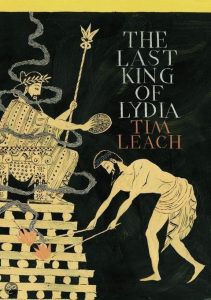
First, I noticed among current writers a wide range of topics and settings within the rubric “ancient.” Alison Morton carries an ingrained knowledge of Roman life forward into a Roman colonia that survives into the modern world. Elisabeth Storrs takes on the elusive Etruscans and contrasts them with their neighbors, the Romans. Settings for Roman fiction include battlefields as well as conquests of a more private and intimate sort, such as those of Kate Quinn’s determined women. Maggie Anton takes her readers to the Jews of 4th-century Babylonia. Mysteries set in the ancient world have led to wide readership for several writers, and as Ruth Downie put it, “Crime fiction is far more elastic than many people imagine. The genre provides a structure that frees me from writing ‘straight’ history, big battles or romance…Most of the feedback I get suggests readers enjoy spending time with the characters in the imagined ancient world where they live.” I myself have dusted off the Hittites in my upcoming series, turning their forgotten queen into a sleuth. Tim Leach covers the same geography (now Turkey), though somewhat later, with his Last King of Lydia (Atlantic, 2014). Gary Corby brings humor to Greek crime solving. Libbie Hawker jumps from 18th Dynasty Egypt to the now-destroyed Palmyra of the 3rd century. This sample gives a sense of the scope. No room for boredom.
 I found a range of views as to how popular with readers these highly diverse ancient settings and topics are.
There was agreement that UK readers are more open than US readers to ancient era novels, particularly “”blood-and-battle Rome.” Maggie Anton noted her medieval books are more popular than her ancient ones. Margaret George commented (and Kate Quinn made a similar observation): “In my experience, having a character already known (a marquee name) makes it much easier to pitch and market…everyone’s heard of Cleopatra.”
In contrast, Elisabeth Storrs feels, “The ‘hook’ of writing about a little known civilization has helped attract readers.” Tim Leach thinks the popularity of the fantasies of Tolkien and Martin is carrying over and making readers “more receptive to stories set in unusual times, places and cultures with which they may not be familiar.”
Gary Corby suggests, “The ancient mystery demographic is spread thin across the globe. There’s pretty much nowhere you can go to find a few hundred ancient mystery fans congregating. This makes marketing somewhat trickier.” But, in moderation of this view, I will offer my recent experience at Left Coast Crime, which is just such a congregation of mystery fans for all periods. Attendees of my panel and a variety of readers at LCC showed intense interest in my Hittite mystery series, which isn’t even out yet. I heard from these readers that what drew them was the accessibility I created to a world they would otherwise never know about. Gary also points out that with ancient world readers, “if someone likes one of your books, then they like all of your books and they’ll buy them all,” and he’s “quite optimistic for the future of ancient mysteries.” Gary Corby attributes his appeal partly to his “colloquial tone and humor” that readers can relate to, and I see similar informality and updated style in many of the successes of ancient world authors, including Kate Quinn, Stephanie Dray and Stephanie Thorton, among others. They aren’t writing the “serious style of ages past,” as Gary put it. It isn’t that their history is modern, but the underlying voice and tone appeals to a wide range of readers today.
Libbie Hawker and others echoed Gary’s point about the loyalty of those who read ancient world fiction. Hawker’s readers stick with her through many books and make up in longevity and devotion what they lack in numerical superiority. Libbie also points out that though her audience may be somewhat niche, by self-publishing and holding onto the profits, she thrives. Despite happy readership, some traditionally-published authors have been steered by their agents toward early 20th century or otherwise more modern eras to reach for potentially larger sales.
 Is there an advantage to writing fiction set in the ancient world? I can summarize the theme I heard over and over as “mind the gap.” Only in this case, the gap is a writer’s best friend. As Kate Quinn said, “Much less historical documentation survives from ancient Rome and Egypt than from, say, the Industrial Revolution or the Renaissance — those gaps in the historical record are gold for a novelist, because we have much more room to build our stories.” Rebecca Lochlann said the gaps “can be filled by a writer’s imagination.” Stephanie Thornton calls it a “freedom” she greatly misses when writing in the overly-documented 20th century. Stephanie Dray mentioned the problem that even the weather is known daily in early America, and when writing about Jefferson, she had to show a “reckless disregard of the weather almanack…If I want to make it rain in the ancient world, I can generally do that without worrying.”
Geraldine Brooks had a poetic way of discussing the joys and mysteries of research for ancient fiction: “The research challenges can be formidable. I’m reminded of what Hans Ernst Gombrich writes in his introduction to A Little History of the World, where he says it’s like dropping a piece of lit paper down a very deep well — the further it drops, the less is illuminated, as oral sources give way to written, written to the archaeological record, and then finally the light is gone. Yet the stories are still there. To get to those darker places you have to be more ingenious. I find going to the places where events happened is useful. The landscape may have changed, but the way the light moves across it, the way the wind blows, the relation of hill to valley or water to land — there are things you can use, things you can experience in the same way your distant characters did. Also, I firmly believe that strong emotion doesn’t change. Love and hate, the will to live, the fear of death — I think we experience them the same way through time.”
As a writer of a people, the Hittites, who were lost to the sands of time, I know the tangible reality of a waterfall or a glimpse of the sea from Mount Ida’s flanks can be a deep inspiration and make the ancient seem utterly present. The other side of this research, the hard work amidst scholarly and dry sources in multiple languages, also has to be done. If you’ve heard Geraldine talk about her process, you know she has done her time in the tomes as well. Maggie Anton noted a “lack of primary sources, especially concerning women.” As Gary Corby dryly observed, “all of that research is what a business person would call a barrier to entry. It’s much harder to get started in ancient mysteries, than say, contemporary thrillers or mainstream literary. The net result is it’s an inherently smaller field [of authors].”
 Geraldine Brooks brought up another thread that I heard from others — the constants across time. Love and hate and our fears don’t change, but also the same themes keep reoccurring in history so that, as writers of the ancient world, we bring to our readers topics of extreme current interest. My Hittites faced a perennial foe that beat their empire’s might with guerrilla tactics and acts of terror against civilians. Sound familiar? Here’s how Ruth Downie put it: “there’s no shortage of parallels with modern times. The religious leaders who are dangerous fanatics — or freedom fighters. The challenge of living in an occupied country — and the challenge of being part of the occupying forces, with all the misunderstandings, mistrust and tragedy that can follow. The awfulness of people-trafficking. The vastly different status of women between different societies. The bizarre cures of quack medicine…” Kate Quinn brought out a different angle of this same point, “since progress in human rights is a jagged advance rather than a linear one, we can often look to the very distant past and see greater freedoms for oppressed minorities than we see in more recent history: consider Imperial Rome when a woman could initiate a divorce with ease…when bisexuality and homosexuality were socially acceptable…The great flexibility of the distant past on such issues means more freedom in our stories, and a chance to talk about current issues in a historical framework.”
Although some professionals (even some overheard at the Denver HNS conference) want to declare “Ancient history is dead!” meaning fiction set therein, I beg to differ, and so do an array of extraordinary writers. So pick up something really old and get reading. Predictions of extinction are premature.
About the contributor: JUDITH STARKSTON’s upcoming mystery features one of history’s most influential and wily of women, Queen Puduhepa. If the sands of time had not buried the Hittite Empire, Puduhepa’s fame would have cast Cleopatra’s into shadow. Now that archaeologists have rediscovered this exotic world, Starkston has brought Puduhepa back to life as a royal sleuth.
______________________________________________
Published in Historical Novels Review | Issue 76, May 2016