The Monmouth Rebellion: Minette Walters’ The Players
WRITTEN BY ADELE WILLS
 It is 340 years since James Scott, Duke of Monmouth, landed in Lyme Regis to lay claim to the English throne, and the memory of that event still resonates. Memories centre not just on the rebellion itself and its disastrous final battle – but on the terrible aftermath where punishments were meted out at the so-called Bloody Assizes by the infamous Judge Jeffreys.
Writers immediately began responding to the rebellion and shared common concerns and attitudes. The earliest writings appeared a few years after the events they depict. In January 1689, a series of pamphlets was published, the first entitled The Protestant Martyrs or the Bloody Assizes – the title alone conveying the message. The work recounts the life and death of Monmouth, but we can also read the dying words of five of those convicted. The saintliness of the rebels is contrasted with the sadistic behaviour of those passing sentence, particularly Jeffreys, who is depicted as a ruthless monster. This was to set the pattern for many years to come, serving a clear political purpose and paving the way for the Glorious Revolution. Broadside ballads of the time echo the same sentiments with Monmouth presented as a Protestant hero whose ‘very presence’ was ‘like the Sun’.1
Over the years, interest in the rebellion persisted but changed in form. In the nineteenth century, magazines for boys – such as Boys of England and The Boys’ Own 2 – became hugely popular, and stories of rebels fighting an oppressive government were consumed with avid enjoyment: Robin Hood under the Norman yoke or King Arthur defying his Roman overlords. Boys of England dedicated its Volume 8 to Monmouth, again characterising James II’s government as tyrannical and autocratic while Monmouth’s death was ‘universally mourned by the people’. Arthur Conan Doyle developed this further in his 1889 novel, Micah Clarke.
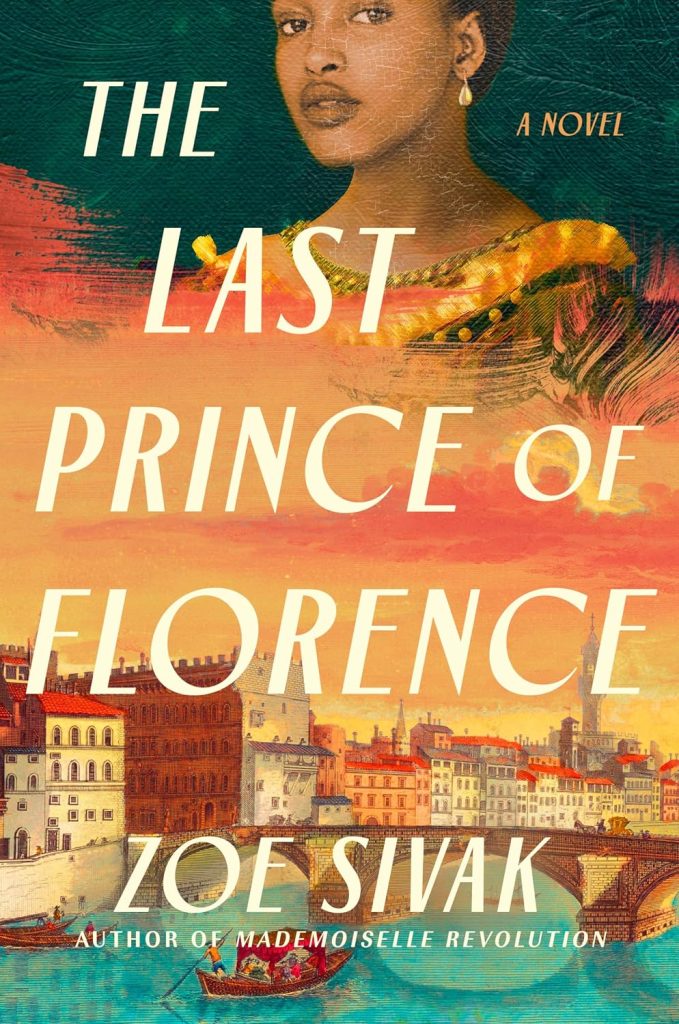
This has provided rich material for contemporary historical novelists such as Minette Walters in The Players (Allen & Unwin/Blackstone, 2025). I wanted to know what Walters thought of these recurring stereotypes. She writes: “I wasn’t convinced that either Monmouth or Jeffreys conformed to those stereotypes. They struck me as men more in need of sympathy than romanticising or villainising. In modern terms, Monmouth was the poorly-educated product of a dysfunctional upbringing, who was easily influenced by men of stronger will. Jeffreys, by contrast, was a man of towering intellect from a relatively humble background who was ambitious to achieve power and status. His unwavering loyalty to James II gave him both, but also resulted in him being incarcerated in the Tower of London as the scapegoat for James’s failures.”
Characterisation is a strong point of this novel, particularly in relation to Jeffreys. Walters further elucidates: “Even at the time, Jeffreys was known to suffer terrible pain from kidney/bladder stones, and his early death at 43 suggests that kidney failure was probably the cause. In addition, Jeffreys was known to be a drinker and was labelled an ‘inebriate’ by his critics. Looking at him through the prism of poor health, self-medication, immense ability and a clear dedication to duty gave me an interesting perspective on his character. I thought him brave!”
Unusually, there is less sympathy for Monmouth himself. “I would have been kinder to him,” she says, “if he had spent his last days trying to win pardons for his followers, as the Earl of Argyll did in Scotland, rather than promising to convert to Catholicism if James spared his life. I consider that a betrayal of the humble men who rallied to his standard and fought for him.” I wondered if it were possible to have any sympathy for James II: “Certainly, if one considers how hard it must have been to step into Charles II’s shoes. The Merry Monarch was loved; his brother was distrusted because of his conversion to Catholicism. For myself, that’s as far as my compassion goes!”
Overall, Walters has taken an interesting angle on the story, choosing to focus not on the battle itself, but on the aftermath with its personal and national consequences. I asked Walters about this. “I was intrigued to discover how few of the rebels met their prescribed fate relative to the number who were convicted and the far greater number who joined the rebellion. At its height, Monmouth’s army stood at 7,000 men, though many deserted when they saw the size of the King’s army. 4,000 were defeated at the Battle of Sedgemoor, of which 1,300 were killed or wounded and 2,700 were captured. Most of the latter faced trial for High Treason, yet fewer than 300 ever reached the gallows. Why? What happened to the others? I conceived The Players to provide answers to those questions.”
Over the last 20 years, there has been a clutch of novels about the rebellion. Tim Vicary’s The Monmouth Summer (White Owl, 2011) is a stirring account of the Colyton rebels. Jude Morgan’s The King’s Touch (Headline, 2002) follows the life-story of the Duke himself while Neal Stephenson’s Quicksilver (William Morrow, 2003) shines an invigorating light on the period’s scientific and philosophical debates. Philippa Gregory also used the rebellion in her novel Dawnlands (Simon & Schuster, 2022), showing in vivid detail the effects of transportation and indentured slavery.
It is the harshness of the punishments that has perhaps made the rebellion a symbol of resistance. The penalty for High Treason was hanging, drawing and quartering, and novelists face difficult choices when describing such sights. There is a memorable scene in The Players where the victim is a young man and Walters comments: “Then, as now, youth wanted adventure. This meant that many of Monmouth’s followers were young … Consider this scene my indictment of Jack Ketch! He was a sadistic executioner who enjoyed inflicting pain.”
Has writing about the rebellion become more apposite than ever, I wondered. Walters concludes that “Policing and justice should be seen to be fair. Foolish governments forget that at their peril”. Wise words for any age.
References
1. Monmouth and Bucleugh’s Welcome from the North: Or the Loyal Protestants Joy for his Happy Return (probable date 1679).
2. Boys of England: A Journal of Sport, Sensation, Fun and Instruction, Volumes 1-66 (1866-1899).
About the contributor: Adele Wills is one of the UK team of review editors for HNR.
Published in Historical Novels Review | Issue 112 (May 2025)