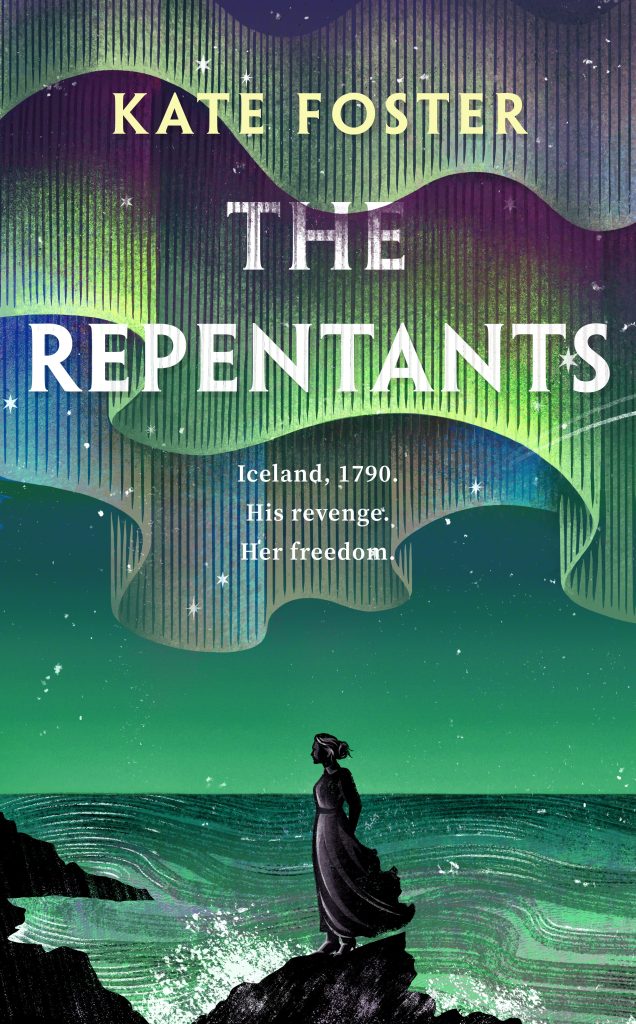
The Repentants
Scotland, 1790, and Florrie Aitken—a wealthy but emotionally neglected housewife—strides out, determined to experience ‘pure bliss’. Unfortunately, just at the moment of bliss—with a sexy Danish merchant—she is arrested and carted off to the Kirk Sessions, accused of immorality. The sexy merchant, of course, disappears.
Florrie is not alone in enduring the public humiliation deemed appropriate by the Kirk. Also on the bench is Eliza Wood: salt serf, in trouble for failing to attend on the Sabbath.
What—wait—serfdom, in Scotland during its Enlightenment, era of Adam Smith and James Boswell? Surely not? But yes. In a historical note, the author explains that in Scotland a 1606 Act, not repealed until 1779, bound colliers and salters to their masters for life: effectively serfdom.
Hence, in a story that explores exploitation in many forms, Jonny, Florrie’s avaricious husband, is the owner of bonded labourers, working his coal mines and salt pans. Greedy Jonny is enticed into a ‘get rich quick’ scheme in Iceland, producing salt with forced labour from a British prisoner hulk anchored in Reykjavik harbour. Jonny and Florrie, with embittered Eliza as their servant, embark to Iceland. On the remote island, heavy with oppressive atmosphere, the women, one bound by marriage and the other by serfdom, discover Jonny’s true plans for them.
It’s the set-up for a tense drama, full of twists and turns, as the oppressed and exploited struggle to escape the manipulative and selfish Jonny. I found this a surprisingly gripping read. The historical note at the end reveals that, although a work of fiction, it is very much inspired by real history. Recommended, especially for feminist readers.