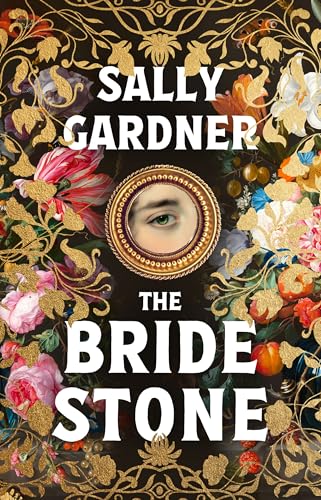
The Bride Stone
When Duval is released from La Force, the infamous political prison in Revolutionary Paris, he returns to London to discover that his father, Lord Harlington, has died and left him two days to fulfil the conditions of his inheritance: he must marry. A rival heir is at his heels, and Duval’s mission seems hopeless until his servant leads him to a customary, but illegal, wife sale at Thetford market. Not knowing quite why, Duval buys the beaten and bruised widow of Samuel Hyde, an aptly named parson. Duval learns about his new wife Edmée – another survivor of the French Revolution – by secretly reading her diary; but even as he falls in love, her identity remains mysterious, as does the meaning of a book locked in her handbox, her only possession. He arranges a ball to persuade polite society of the legitimacy of their union, but the ball drags other émigrés into Edmée’s new life, including the enigmatic Marquis de Soule. She fears that the secrets of her past will now unravel her present happiness. When Edmée suddenly disappears, Duval enlists the services of Joseph Quinn of the Bow Street Runners to investigate and finally solve the mystery of his wife.
Gardner has previously written Revolutionary stories and retold fairy tales, and this work combines the two: the hero must complete an impossible quest and break his beloved’s curse so they can live happily ever after. She shows us vividly the end of the ancien régime through the past lives of its émigrés, and this book shares some engineering magic with her last 18th-century novel, The Weather Woman. Gardner acknowledges that this was a difficult novel to write, and readers may notice some of those difficulties. That said, this is definitely one for lovers of mystery and Georgian romance.