Queen of Shadow
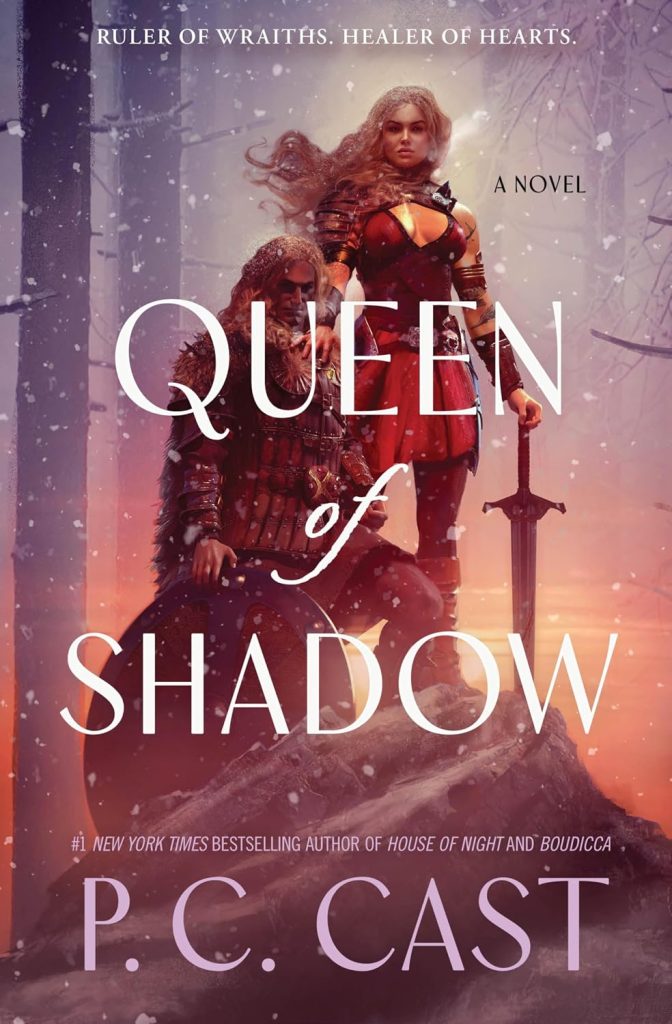
Among the early Irish heroic tales about Cuchulainn, the Hero of Ulster, is a brief account of his training in combat from Scáthach at her fortress on the Isle of Skye. From this, the author draws various characters and details, which she expands, modifies, and reconfigures in this heroic fantasy novel. And while some attitudes may seem surprisingly enlightened, the pre-Christian cultural setting feels credible.
Here, Cuchulainn and Scáthach are each the offspring of a human and divine parent: he the son of the imperious sun god Lugh; she the daughter of the Underworld goddess Befionn, who is a loving mother. There is, consequently, a vast difference between how each is reared from an early age: he in a violent warrior culture that glorifies revenge and the importance of winning regardless of cost, to both others and oneself; she by caring parents. Scáthach teaches her students not only weapon skills, but ‘the moral responsibility that should go along with being a true hero’. This means protecting the vulnerable and supporting comrades rather than viewing them as simply rivals. Moreover, her attitude towards her enemies is shaped by the same tolerance, compassion, and forgiveness which she shows to all. ‘Mercy,’ she says, ‘does not equate to weakness.’
As Cuchulainn drily responds, mercy ‘is not one of the strengths of the warriors from Ulster.’ He has much to learn, but fortunately he is an apt pupil and his admiration for Scáthach soon turns to love. Will he, however, be able to defy the weight of his father’s will, Ulster’s expectations, and the tragic fate that has been foretold?
From the traditional celebration of warrior pride and valour, Cast has woven a story of love and compassion that broadens and redefines our concept of heroic sacrifice. Highly recommended.