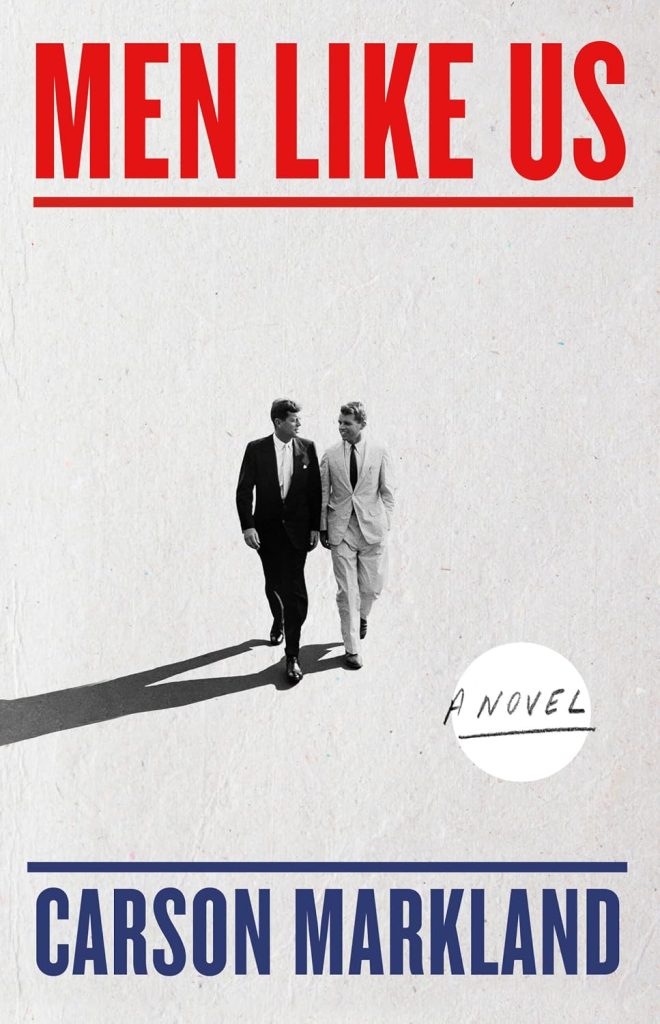
Men Like Us
Many historical novels have tried to explore the minds and marriage of John F. and Jacqueline Kennedy, but few have taken on his almost equally revered brother Robert. Markland attempts to correct this lack by dramatizing the relationship between the two brothers and their many other siblings during the years of JFK’s meteoric rise in American politics. Although Robert’s is the point of view, the emphasis is on the family dynamics of the Kennedys and particularly each adult child’s relationship with their powerful father. Joe Senior is the sun they all orbit, but we get very little insight into his character; Markland chooses to help us understand “Bobby” by following his train of thought at critical moments in his and Jack’s careers.
Markland relies on the reader’s patience. The interactions among the Kennedys seem superficial at first, but by assembling the full portrait of Bobby in this manner, piece by piece, she achieves an insightful family portrait. Bobby’s isolation from his more cynical and ambitious siblings gives way to an intense desire to use his family’s fame and power for more than mere celebrity; his growing friendship with his enigmatic sister-in-law Jackie feeds this motivation as well. Readers hoping for juicy tidbits about the Kennedy scandals might be disappointed – the tone is cerebral and philosophical throughout, and the emotional and sexual lives of Jack and Bobby are not the focus. Rather, this novel offers a meditation on how politics shifted radically in the television age, and how Jack and Bobby were instrumental in that change. “Our great, great, great grandchildren – they can be fools. We have to be made of sterner stuff,” Bobby imagines saying to his brother Teddy, and Markland clearly expects the reader to compare the pathfinding of the elder Kennedys to their descendants’ less illustrious careers.