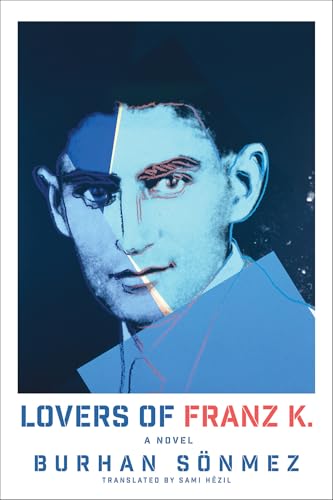
Lovers of Franz K.
When Franz Kafka was dying, he made his best friend, Max Brod, promise that he would never publish his writings. Brod ignored his friend’s request, published Kafka’s work, and became a target of Kafka’s fans, who attempted to kill Brod. This novel is an intellectual tour de force about the student who allegedly attempted Brod’s murder but killed another student accidentally.
It’s 1968. Ferdy Kaplan, the suspect, has ties to several countries with different political histories, Germany, France, Turkey; this makes him vulnerable, but he is a sharp individual who is a match for his prosecutor. The plot action focuses on Ferdy as he is interrogated in a West Berlin police station, a courtroom, and a prison, and it is mostly developed in a dialogue format that recounts the ongoing interrogation.
Kafka said that the human condition was “absurd” and that the human race was the product of one of “God’s bad days.” Sönmez understands Kafka well. The dialogue of his novel reads much like a Kafka story. It is replete with inconsistencies, factual contradictions, ridiculous assertions, maddening repetitions, and absurdist proclamations about the human condition and society. For example, Max Brod is considered both villain and hero.
The plot reflects the turbulent times—1960s Europe—with its issues of religious belief, the question of truth, social unrest, anti-Semitism, the aftermath of Nazi brutality, and women’s rights. The plot also explores significant human issues as they impact individuals: morality, responsibility, love, friendship, and aging.
This is a novel that demands close reading and re-reading. A puzzle to work on.