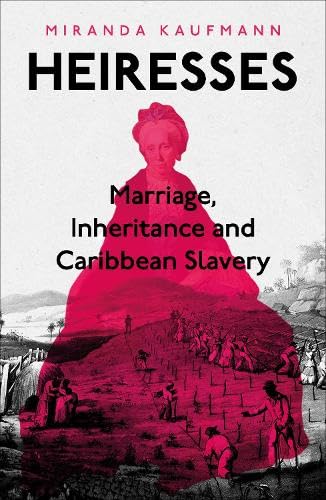
Heiresses: Marriage, Inheritance and Caribbean Slavery
In this fascinating study, Miranda Kaufmann explores the lives of nine women whose wealth derived from the slave trade. Scholarly and incredibly well researched, this will no doubt become essential recommended reading for those wishing to learn more about this shameful era. Females became heiresses by accident when a family’s male line dwindled out, resulting in girls and young women whose contaminated riches allowed them entry to the most prestigious social circles.
Reading about enslaved people in the Caribbean is painful. Did the heiresses feel any sort of sympathy for those they exploited? Highly unlikely. Their wealth was fabulous, and their sole concern was to preserve it and use it for climbing the social ladder through judicious marriages. Then, settled with a husband, they could spend it on a life of opulence. Interestingly, some married into families of colonial administrators, so money derived from the Caribbean slave trade found its way into the development of countries such as India and Australia.
Our perception of famous figures from the 18th and early 19th centuries is altered by this book. For example, Jane Austen’s aunt by marriage, Jane Leigh Perrot, fought to acquire her Barbados inheritance, but it never occurred to her to offer any financial help to her husband’s sister and family. Jane Austen was not so much concerned about the provenance of her aunt’s wealth as her stinginess.
Each heiress’s story is absorbing in its own right and could easily form the basis for a novel. Kaufmann’s research culminated in new knowledge of her own maternal family’s involvement in the slave trade. Its tentacles reached into every aspect of Georgian prosperity. Who is to blame? Should we condemn a society and culture with a morality so at odds with ours? It’s a book to educate us and provoke reflection and discussion.