Death in the Tallgrass
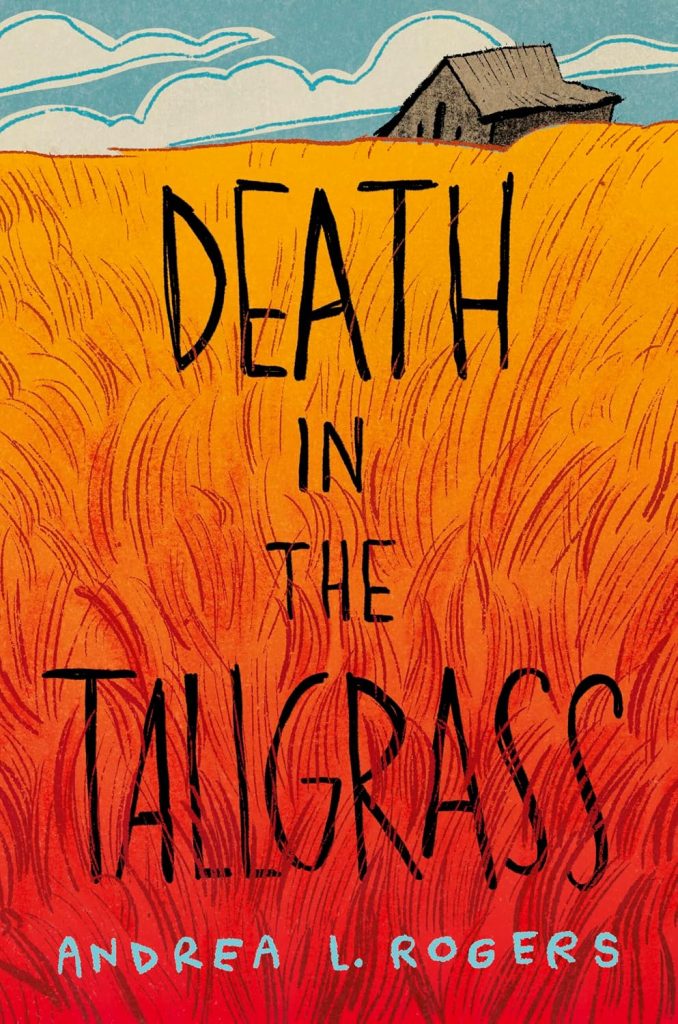
In summer 1968, 12-year-old Cynthia and her family are moving from Dallas to Tulsa for her father’s job as a law professor. But first, they’re staying with his parents, Bill and Martha Haggard, on their Oklahoma ranch. Cynthia’s father has been estranged from his parents ever since his marriage to a Cherokee woman, but he agrees to help them save the failing ranch that has been in the family since the 1920s. Cynthia dislikes the heat, insects, snakes, endless chores, and isolation. Her antiwar activist older sister, Diane, strikes up a friendship with Will Paul, a Cherokee teen who sometimes works on the farm with his grandfather, while her younger sister, Wren, becomes close to “Mama Martha.” Cynthia spots an old charm bracelet half-buried in the dirt, and while putting it away for safekeeping, she and Wren find a mysterious note in their bedroom from 9-year-old Violet Wood in 1920 ending with, “Should I be found dead, presume murder.”
When Cynthia and Wren learn more about Violet and the Osage and Cherokee people forced into Oklahoma after the Trail of Tears and other government actions, they come to realize that their prejudiced grandfather is more despicable than they could have ever imagined. As this gripping story for middle-school age readers unfolds, no one is safe, not even the children. Rogers’s novel explores the violence of the 19th and early 20th centuries upon which the wealth of prominent, mostly white families of the region was based. Immersive descriptions of the landscape, including a secret fishing hole that alters the direction of multiple lives, give the story a ghostlike feel, though the horror that characters past and present experience is entirely real. The novel includes an author’s note with sources about the experiences of the Osage and Cherokee in Oklahoma.