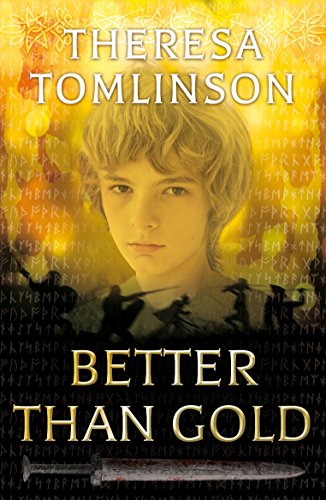
Better than Gold
This is a welcome story about a little-known period of Saxon history and welcome, too, because of its neglected northern setting where so much happened that shaped England before the Conquest. Paganism is the indigenous religion but things are changing; bishops like Cedd are being sent to convert the populace to Christianity.
The story concerns Egfrid, ten-year-old son of the Christian King Oswy of Bernicia, and what happens when he is taken hostage by his father’s enemy, the pagan King Penda of the Mercians, in an attack on Bamburgh Castle. Mocked by Penda as ‘Faint-heart,’ Oswy proves to be less than heroic. He runs away instead of fighting, he breaks his oath, he betrays his allies. Penda regards Oswy as being afflicted by ‘the coward’s disease,’ Christianity; he’s a hypocrite who never stands by his beliefs.
In an age when it was deemed honourable to die in battle and dishonourable to break an oath, Egrid’s own loyalties are torn asunder, especially when the ageing and battle-hardened Penda is seen as unflinchingly true to his pagan values which gives weight to Egfrid’s conflicted loyalties.
The plot drives along at a good pace and concludes with a satisfyingly nail-biting battle. The way ‘peace-weaver brides’ are depicted and how Saxon women had a strong say in matters of war and peace tells us much about that period.
Part of the purpose of the story was to imagine why the Staffordshire Hoard and other caches of Saxon gold came to be buried. Whether Theresa Tomlinson’s account is true or not, it sounds plausible and brings alive the often complicated politics of the time. Any child interested in Saxons will identify with Egfrid’s dilemma. Finally, who would imagine Tamworth and the industrial Midlands could have such a romantic aura?