Launch: Marlie Parker Wasserman’s First Daughter
INTERVIEW BY SUSAN HIGGINBOTHAM
Marlie Parker Wasserman writes historical crime fiction after a career in scholarly publishing. She has written The Murderess Must Die (2021), Path of Peril (2023), Inferno on Fifth (2023), and First Daughter (2026). Her books are set between 1895 and 1927, primarily in the United States. Marlie lives with her husband in Chapel Hill, North Carolina.
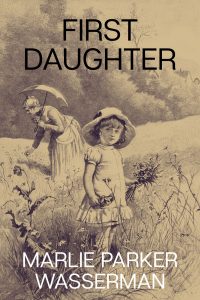 How would you describe First Daughter and its themes?
President Grover Cleveland and his young wife, Frances, panicked in 1895 when their three-year-old daughter disappeared from their summer residence on Cape Cod. Could the ransom note, requesting an oddly small sum, serve as a clue to the identity of the culprit?
What brought about your interest in the Clevelands, and Frances in particular?
My interest in Grover Cleveland began with my interest in one of his successors—Theodore Roosevelt. TR played a minor role in my first novel, The Murderess Must Die, where he refused to commute the death sentence of convicted criminal Martha Place, and he appeared as well in my second novel, Path of Peril, where he defies several assassination attempts in Panama. While reading about TR and plots to kill him, I came across information on plots to kidnap Cleveland and his children.
Children?! That fear and drama stuck with me. I also learned that Cleveland married a college-educated woman twenty-eight years his junior. Although he had practiced law, he never attended college. One more detail sparked my curiosity. Frances Cleveland did not support the vote for women. What kind of woman, a college graduate, would not want the vote? I had to think about that to write about that.
As your website states, there is no indication that a child of the Clevelands was kidnapped. What made you consider the possibility that one might have been?
The historic record includes several letters threatening to kidnap one or more of the Clevelands’ daughters. These letters were most likely not serious threats, but Frances Cleveland would have worried about them, nonetheless.
In addition to finding those letters, I read many accounts of the Clevelands’ lives. The family became adept at keeping secrets. Grover and Frances kept the secret of their engagement for a year, while Grover campaigned for president and waited for his first inauguration, and more dramatically, in 1893 Grover and Frances kept buried the secret that the president was operated on for a cancerous growth in the roof of his mouth.
If the couple could keep those secrets, it’s plausible they kept the secret of a kidnapping. In short, we have no evidence that the Cleveland toddler was ever kidnapped, but my imagined story is not outside the bounds of the plausible.
While my story blends fact and fiction, I aimed to present an accurate glimpse into the life of a sitting president and his family near the turn of the century and also a window into some of the struggles of the era.
The Clevelands’ domestic crisis occurs against the backdrop of actual events, including calls for clemency for convicted killers, the struggle over the gold standard versus the silver standard, the president’s decision about whether to run for a third term, and the aftermath of the Pullman strike. Like many historical novelists, I felt the temptation to write accounts of those historical events and worked hard to simply feather in references.
What are some of your favorite resources for research?
The Library of Congress newspaper archives are my favorite research tool. They are well organized and free. I wish all newspapers were archived there. Instead, many are behind firewalls.
In writing your novel, did you know who was the kidnapper from the start? Or did you make that decision during the writing process?
Although I am an extreme pantser—outlines terrify me—in this case, I did know the identity of the kidnapper. I also knew I had a treasure trove of possible culprits that could provide a pool of red herrings. Cleveland was fifty-eight in 1895, which gave him plenty of time to make enemies.
Several of your novels have been set in America’s Gilded Age. What attracts you to this period?
We all think we live in a time of rapid social change. And we do. But the period of our adult lives is not the first period of rapid social change in the U.S. In one of my novels, the unfamiliar electric iron makes an appearance. In the novel I am working on now, set in 1921, the automobile enters into the plot.
In First Daughter, the telephone plays a role. Some areas in New England have phone access. Others don’t. Toward the end of the novel, a demonstration of electricity drives the plot. I like my characters to struggle with each other, with crimes or threats of crime, and with newfangled contraptions.
I know you enjoy traveling. Did you travel to any of the places associated with this novel?
No. I’ve traveled through Barnstable County to vacation in parts of Cape Cod far from the town of Bourne, where my story occurs, but that was long ago. My thinking about this lack might interest those who write historical fiction. Even if I had visited Bourne, everything there has changed so much that I believe I would be disappointed.
 Above all, Gray Gables, the Clevelands’ summer house, no longer exists. It was turned into a restaurant, then the restaurant burned down, then a lovely new home was built on the site. I researched the original house and found drawings and descriptions that I used.
As for the configuration of the land, that changed too. The Cape Cod Canal was built between 1909 and 1916, reshaping the surrounding area. The old maps on my desk were not detailed enough for my purposes. I struggled to imagine the precise paths my characters might have taken, but I don’t think a visit would have helped.
Last but not least, when I researched flora and fauna, I learned that vegetation evolved due to development and climate change. I wish I had managed to walk around one of the ponds I describe toward the end of my novel, but some of the plants I would have seen were different than the ones the Clevelands would have seen.
What is the last great book you read?
Julia Álvarez, The Cemetery of Untold Stories

HNS Sponsored Author Interviews are paid for by authors or their publishers. Interviews are commissioned by HNS.