Launch: Sandra Wagner-Wright’s The Life & Times of Sarah Good, Accused Witch
INTERVIEW BY SUSAN HIGGINBOTHAM
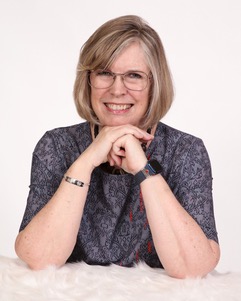
Sandra Wagner-Wright is an award-winning author of historical fiction, specializing in strong women at pivotal moments in history. She holds a PhD in history and taught at the University of Hawai‘i before turning to full-time writing.
How would you describe this book and its themes in a couple of sentences?
The Life & Times of Sarah Good, Accused Witch is a reimagining of the 1692 Salem witch trials as they affect one powerless woman. A searing look at injustice and ambition.
 What brought you to writing historical fiction?
Before I became a writer, I read stories. Some were fairy tales, and some were myths. There were novels, and mysteries, and books about historical figures. By the time I got to high school, I was fascinated by stories from the past, whether “factual” histories or historical novels.
So it was hardly a surprise that I majored in history when I went to college and eventually earned a doctoral degree. I learned how to write history and tell stories about history. As an academic historian, I published academic history.
But writing academic history didn’t allow me to tell the stories I wanted to tell. Academic publications are closely tied to the written record. Not just what happened where, but what the subject wrote or what others wrote about her. There’s not really room to flesh out the subject as a person. My writing is tied to the historical record but not confined by it as I develop my subject’s character.
Writing historical fiction, I am grounded by facts and the actions of my characters, but I can develop my characters as people. Sometimes the wheel of fortune blesses their endeavors; other times, the wheel turns against them. My task is to illuminate their responses, not report them.
Several of your books are set in Salem. What sparked your interest in this setting?
Salem, Massachusetts is certainly a locale steeped in history.
During the 1990s I was in the Boston area on research leave. While there I visited Salem and the Philips Library at the Peabody-Essex Museum, which was then located in Salem. I became interested in the rivalry between the Crowninshield and Derby families and took notes from letters written by women of these families during the 18th and early 19th centuries.
Upon returning home, my notes languished in the back of a closet. In 2021, I began looking for a new writing project. I then remembered the notes from Salem, and the Salem Stories series was born.
As a historian, do you find writing historical fiction liberating? Or do you sometimes feel uncomfortable “making stuff up”?
The genre of historical fiction is very broad. Sometimes the historical “setting” is more of a backdrop for a story. Other times, the story is rooted in actual events. I fall into the latter group of storytellers.
In The Life & Times of Sarah Good, Accused Witch, I wrote a scene about the Great Swamp Fight of 1675. The battle was a key event in King Philip’s War between the New England colonial militia and the Narragansett people. Tom Putnam, the Younger, one of three key characters in the book, survived the battle. Those are the facts. Given the nature of the event, I believe he suffered severe PTSD afterward, and that this trauma influenced his actions twenty years later. I would not characterize my interpretation as “making stuff up.” I view it as a fact-based derivative of known events.
Do you have a favorite story about doing historical research?
I like to do site visits so I can glean a sense of what my characters experienced. When doing research for Two Coins: A Biographical Novel, this included a visit to Kolkata, the site of Mary Pigot’s court case against Rev. Hastie. I was able to visit remaining buildings from the British colonial period where events took place.
Research travel also took me to the Scottish National Library in Edinburgh and the British Library in London. At the British Library, about two days before my departure for home, I discovered microfilm of the Indian Daily News that contained transcripts from the trial of Pigot v Hastie. Thanks to modern technology, I was able to copy the relevant pages in a somewhat frantic effort to gather the information before my flight home.
It’s surprising how “exciting” research can be.
Who is your favorite supporting character in your novel?
Among the supporting characters, I am sympathetic to Samuel Braybrook, the assistant deputy constable of Salem Village. An ordinary man of average education, Samuel is charged with picking up and transporting the accused witches. He suspects it’s only a matter of time before the witches torment him for his actions.
Ordered to arrest Sarah Good’s five-year-old daughter Dorothy on suspicion of witchcraft, Samuel inwardly questions his order but carries out the arrest. Yet he shows compassion for the child. He introduces her to his horse and promises she’ll have a good view from the animal’s back. Samuel can’t change the child’s fate, but at least he has compassion for her situation.
Your book is part of a series. What are some of the challenges and advantages you found in writing a series?
One advantage of a chronological book series is that readers can delve more deeply into the characters and the historic events that affect their lives. Similarly, in a thematically linked series, readers know what type of book to expect.
 What writers (not necessarily historical novelists) have influenced your work?
Among popular works of history, I like the approach used by Barbara Tuchman and David McCullough to bring well-written history into the mainstream.
Philippa Gregory and Hilary Mantel are two of my favorite writers of historical fiction.
I noticed on your website that you have a blog. Do you find it a challenge to keep it up and attend to your novel writing as well?
Initially, I published a weekly blog, but now publish on a bi-weekly basis, and sometimes take a break. I publicize a new blog via a newsletter that also contains information on my current and upcoming books.
Writing a blog, or occasional blog series, allows me to research, write, and publish about a topic in a short amount of turn-around time. The blog allows me to connect with people who wouldn’t otherwise read my work. For example, a relatively recent piece I did on Fannie Farmer connected me with a reader who makes recipes from the original Fannie Farmer cookbook. Hopefully, she’ll check out my books.
What is the last great book you read?
For a change of pace, I like to read books by K. F. Breene.

HNS Sponsored Author Interviews are paid for by authors or their publishers. Interviews are commissioned by HNS.